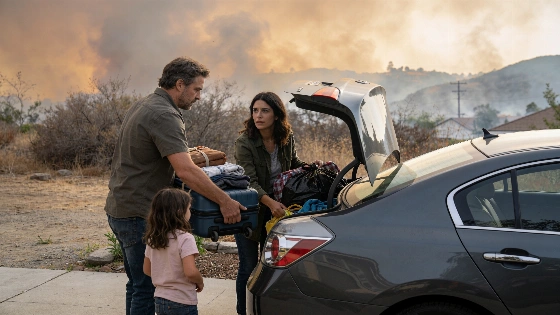
Mandatory evacuation orders for wildfires now happen regularly in California and other fire-prone regions. In January 2025, the Palisades and Eaton fires forced nearly 200,000 people to leave their homes as flames spread. While these large-scale evacuations grab headlines, smaller and more frequent orders occur throughout the year, often without national attention. The National Weather Service's Los Angeles/Oxnard office issued a Red Flag Warning on November 6, 2026, stating that dry fuels, strong winds, and low humidity can quickly create dangerous fire conditions. Residents near wildland-urban interfaces must stay ready to evacuate if a wildfire starts. This warning system shows that evacuation readiness is a constant need in high-risk regions, not just a reaction to major fires. Residents are pointed to preparedness resources like Ready for Wildfire and Wildfire Risk to help with advance planning (National Weather Service Red Flag Warning).
Communities in high-risk areas now treat wildfire threats as part of daily life. Population growth and climate change have made these events more frequent and intense, raising the stakes for personal and community readiness. Groups like NFPA and the Fire Protection Research Foundation are working to improve evacuation practices, including standardizing warning messages and guidance for first responders. Official transportation guidance from the North Carolina Department of Transportation stresses that evacuation safety depends on leaving quickly and using designated routes set up for emergency operations. Law enforcement officers and safety-patrol units are stationed along major corridors. Leaving these routes increases the risk of getting stranded or lost. The agency also advises leaving with a full tank of gas and bringing water and nonperishable food, since businesses may be closed during emergencies (NCDOT evacuation guidance).
Lessons from Survivors and Responders
Fire service personnel, researchers, and wildfire survivors have provided insights that shape current evacuation recommendations. Investigations after deadly incidents in Hawaii, California, and Tennessee have shown the dangers of heat and flame exposure. Protective steps-like staying in vehicles and wearing the right clothing-can save lives for those near active fires. Still, federal workplace-safety rules from OSHA warn that no single set of protective equipment and clothing can guard against all hazards. Protective gear must be chosen after a site evaluation, and regular household clothing does not match firefighter personal protective equipment or gear selected for work (OSHA 29 CFR 1910.120).
Preparation steps such as assembling a go-kit and planning multiple evacuation routes are stressed. Practicing escape plans and keeping household members together can help. Coordinating with neighbors, especially those who are older or disabled, can reduce the number of vehicles on the road and help keep everyone safe. Official guidance also tells motorists whose vehicles run out of fuel or break down to move safely onto the shoulder so evacuation lanes stay open, showing why keeping road capacity for emergency responders matters.
Community Readiness and Ongoing Challenges
Even after more than two decades of NFPA wildfire programs aimed at making homes and neighborhoods ignition resistant, many communities are still not ready for wildfire threats. Firefighters focus on life safety during emergencies, and evacuation orders are needed to get residents out of danger before structure protection can start. The National Weather Service's Red Flag Warnings, like the one issued on November 6, 2026, highlight the need for advance actions such as keeping transportation ready, watching official alerts, and knowing evacuation routes before a fire begins.
Routine, life-saving evacuation operations often go unreported in national news, even as headlines focus on destruction and displacement. Wildfire safety advocates keep gathering feedback from responders and affected residents to find what works and what needs to change. These efforts aim to move the focus from rescue to resilience in communities facing wildfire risk. Evacuation safety relies on coordination between weather agencies, transportation authorities, and workplace-safety regulators, each with a key role in protecting lives during wildfire emergencies.