
California's drive for progressive regulation has produced a dense network of building codes and insurance rules that, according to a June 2026 Berkeley Economy and Society Initiative paper, push up costs for those with the least room in their budgets. The research, led by Samuel Trachtman, looks at how policies meant to help can end up raising the price of basics like housing and home insurance, especially for lower-income families.
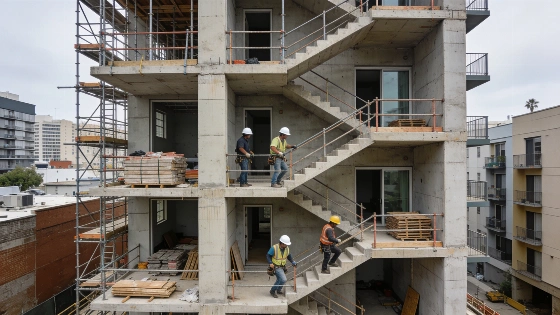
The requirement for two stairwells in apartment buildings over three stories stands out among the findings. This rule, aimed at fire safety, adds major construction costs. Analyses from Pew and the Center for Building in North America, cited in the paper, estimate that single-stair designs in midsize buildings could cut costs by about 10 percent without a measurable drop in safety. Cities such as New York, Seattle, and Honolulu already allow single-stair buildings up to six stories and have not seen higher fire death rates so.
Local code differences and insurance premium caps
California's building codes don't just differ from state to state-they can shift sharply from city to city. For instance, San Francisco enforces stricter standards than neighboring Oakland in areas like energy efficiency and seismic design. This patchwork forces developers to redesign projects for each jurisdiction, which drives up architecture and engineering fees. The paper references a RAND study linking these higher costs to the complexity and variability of local codes. A 2025 law, AB 130, froze residential building code updates for six years, giving some predictability but also locking in many expensive requirements.
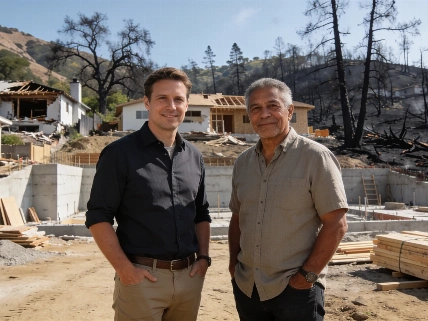
Insurance regulation has also produced side effects. When state regulators capped how much insurers could raise homeowners' premiums in response to wildfire risks, many insurers responded by canceling policies. More homeowners have ended up on the state's FAIR Plan, which usually costs more. The California FAIR Plan, set up as the state's insurer of last resort, saw its number of homeowner policies climb to more than 668,600 by the end of 2025, up 44% from about 464,900 in fall 2024, according to the California Department of Insurance. The plan's total exposure reportedly reached $724 billion, a 230% increase, showing the shift of risk from the private market to this public-private pool. The FAIR Plan offers narrower and generally pricier protection than standard homeowners insurance, and is meant for properties that can't get coverage in the ordinary market. As private insurers withdrew or declined renewals, more homeowners had to use the plan to meet mortgage insurance requirements. This setup is regressive, since households with less money have less ability to handle higher premiums, large deductibles, limited coverage, or the cost of extra policies. The plan's policy count was about 2.5 times its 2022 level, marking a multi-year slide in market conditions. In October 2026, the FAIR Plan got approval for an average 29.1% homeowners-rate increase, compared with the plan's original request for a 35.8% increase, as reported by the California Department of Insurance.
California's homeowners-insurance crisis took shape under Proposition 103, passed by voters in 1988, which requires insurers to get the commissioner's approval before raising rates. Industry officials have said the approval process was too slow and restrictive to keep up with worsening wildfire exposure, while the state kept controls aimed at protecting consumers. In September 2023, Governor Gavin Newsom issued an executive order directing Insurance Commissioner Ricardo Lara to develop the Sustainable Insurance Strategy. This strategy aimed to allow forward-looking catastrophe models and certain reinsurance costs in rate filings, while requiring participating insurers to expand coverage in high-risk areas. According to the California Department of Insurance, these reforms were designed to give carriers more flexibility to price wildfire risk while tying that flexibility to obligations to write more policies in distressed communities. Supporters say these changes could bring insurers back to California, while critics worry that model-based pricing may drive up premiums in vulnerable locations. Average monthly new FAIR Plan policies stayed above 2022 levels but had dropped 27% from 2025, hinting at an early slowdown in growth without showing that affordability has returned.
Proposed reforms and hidden costs
The Berkeley paper calls this pattern "regressively funded progressivism"-rules meant to help, but whose costs show up in higher prices for basics. The author recommends statewide adoption of single-stair designs for midsize apartments, a cost-benefit review of code provisions, and a state appeals process for local code interpretations. By making these costs more visible, the paper suggests, California could keep safety standards while easing the financial strain on lower-income households.
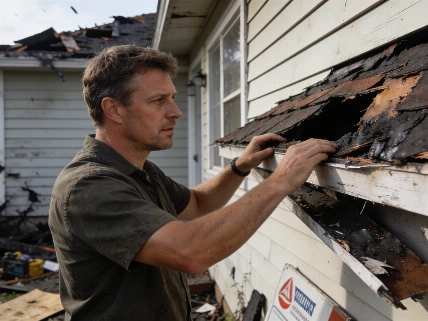
In the future, incoming California Insurance Commissioner Jane Kim has proposed putting wildfire losses in a publicly run, nonprofit insurance program while leaving private insurers responsible for other homeowner risks. Her proposal would use risk and property-value factors to set premiums, include a capped contribution from all California homeowners to help pay for severe wildfire seasons, and cap coverage at a replacement-cost amount meant to rebuild a typical home. Kim has also called for more oversight of smoke-damage claims and described her goal of making the FAIR Plan "more transparent, accountable and sustainable." New rules starting January 1, 2027, would bar insurers, including the FAIR Plan, from outright denying smoke-damage claims without first conducting a good-faith investigation, according to reporting from NBC Los Angeles. California has also considered raising FAIR Plan residential and commercial coverage limits for the first time in 25 years to reflect higher rebuilding costs, as noted by the California Department of Insurance.
The insurance-cost problem ties closely to the mix of wildfire losses, climate-related risk, insurer solvency concerns, and California's rate-approval system. Insurers that can't get rates reflecting expected catastrophe losses may cut new business, decline renewals, or leave the state, while letting rates rise can make coverage unaffordable for homeowners and renters who feel the impact through housing costs. The FAIR Plan's growth has shifted more wildfire exposure to a residual pool, increasing pressure for rate hikes and broader coverage limits. The Sustainable Insurance Strategy marks a regulatory move toward allowing more prospective risk pricing, while the FAIR Plan's 2026 rate action shows that consumers are already absorbing part of the adjustment. For further background on the intersection of regulation and affordability, see the original source.