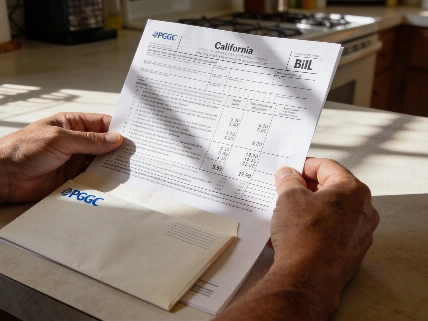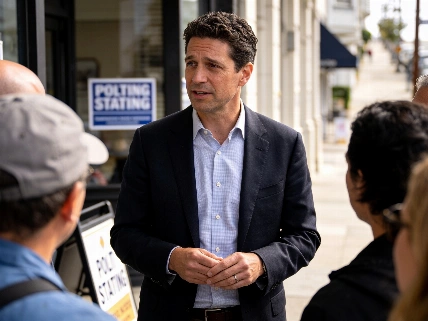

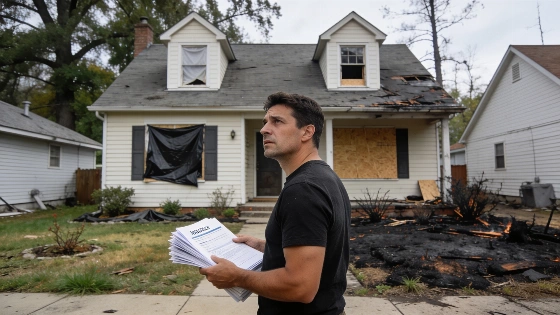
Insurers that previously pulled back from disaster-prone areas are now stepping up efforts to attract homeowners, with new data showing an 84% rise in home insurance advertising spend from January to September 2026 compared to the same stretch in 2025. MediaAlpha, Inc. reports this jump comes alongside a doubling of state market presence since 2023, as carriers pursue strong demand and react to shifting climate and regulatory factors. MediaAlpha said its marketplace handled over $2.5 billion in annualized property-and-casualty ad spending during the third quarter of 2026. Home and renters insurance revenue reached $66 million, up 116% from the year before. CEO Steve Yi pointed to renewed carrier activity in Florida, California, and Texas during the company's third-quarter earnings call.
MediaAlpha's latest report, The State of Home Insurance: What Insurers' Ad Spending Reveals About the Industry, draws on first-party spending and search data from its programmatic insurance marketplace. The findings show that insurers' advertising choices can signal where they see opportunity, often before policy counts shift. CEO and Co-founder Steve Yi said, "What carriers spend to acquire customers shows where they see opportunity, often well before it shows up in policy counts." The report links insurers' renewed market moves to two main forces: homeowner demand and climate-related disruption, with state regulation also playing a role. MediaAlpha noted that U.S. home insurers returned to profit in 2025 as premiums better matched risk and the hurricane season was relatively calm.
Growth, climate, and regulation reshape insurer strategy
Two main forces are shaping where and how insurers compete for homeowners: growth in demand and climate-driven disruptions. Regulatory changes also factor in. Home insurance searches hit 122 million in the first nine months of 2026, the highest since MediaAlpha began tracking in 2016. Among shoppers who disclosed their coverage status, 62% already had a policy, showing many are looking to switch providers. The report found that insurers advertising in both 2025 and 2026 raised their home-insurance spending by 84% during January-September 2026 compared with the same period in 2025, after nearly tripling spending in 2025 over 2024. The same carriers advertised in about twice as many state markets each month in 2026 as in 2023.
Texas remains the largest market, making up about 19% of insurer ad spending. Georgia has become the second largest by spending, with average monthly spending per insurer up 148% from a year earlier, compared to an 82% increase across all states. Illinois became the fifth largest market for insurer home ad spending on MediaAlpha's marketplace this year, even though it ranked only 29th for new single family homes built from 2021 to 2025. Average monthly spending per insurer in Illinois climbed 203% while the number of insurers advertising there dropped, showing that total spending can rise even as the number of carriers falls. After Hurricane Helene in 2024, insurers advertising in Georgia and South Carolina increased their spending in those states within four months, showing that catastrophe exposure can pause acquisition activity without ending carrier interest. In Florida, where ad spending fell sharply after Hurricanes Helene and Milton, carriers started returning within months. MediaAlpha's research team summed up, "Disasters cause pauses, not exits."
Regulatory changes are also shifting the competitive landscape. In California, insurer spending rose in December 2024 after the state finalized rules allowing wildfire catastrophe models in rate setting, and continued to climb after the Los Angeles wildfires in January 2025. MediaAlpha said these regulatory changes affecting rate adequacy may have influenced carrier appetite along with catastrophe conditions. The core issue is that insurers need premiums and approved rating methods to reflect expected losses, while regulators must balance solvency and availability against affordability for policyholders. The report presents California as an example of regulation changing competitive behavior rather than simply deciding whether insurers advertise or leave. The Swiss Re Institute's Sigma 1/2026 found that insured natural-catastrophe losses are rising by about 5% to 7% annually in real terms, and the gap between insured and uninsured climate losses keeps widening, leaving households and governments exposed even where insurers resume marketing. These findings were reported by Insurance Business.
Florida's unique pipeline and shifting market shares
Florida's share of insurer ad spending dropped from about half in late 2023 to just 5% in 2026. One likely reason is the state's rule that Citizens policyholders must accept a private insurer's offer priced within 20% of their Citizens premium, giving insurers a steady stream of new customers without advertising. This regulatory setup has changed the competitive landscape and reduced the need for aggressive marketing in Florida. Florida's market reforms, enacted at the end of 2022 and effective January 1, 2023, aimed to improve affordability, stabilize the insurance market, restore confidence among reinsurers and capital providers, and encourage new company formations. The reforms are part of the backdrop to the later return of private-market activity and advertising in Florida.
For context on insurer strategies in other states, Utah recently led the nation in homeowners insurance policy nonrenewals, as reported earlier. National Association of Insurance Commissioners data showed that insurers initiated just over two million homeowner-policy non-renewals in the United States during 2024, 61% more than in 2023. Non-renewal rates rose in every NAIC region between 2018 and 2024, with the West recording the highest 2024 non-renewal rate at 25.1 per 1,000 policies, followed by the Southeast.
In the future and data limitations
The MediaAlpha report points to several developments to watch, such as whether growth will spread beyond early leaders like Texas and Georgia, and how competition in Illinois may change when the state starts reviewing rate changes on July 1, 2027. The report also notes that a strong El Niño could bring more storm-driven pauses in insurer activity, rather than permanent exits. MediaAlpha's data tracks marketing activity as an early sign of insurers' willingness to compete, not as a direct count of policies written or total market capacity.
All figures reflect activity on MediaAlpha's marketplace and may not represent the insurance market as a whole. Spending growth compares only insurers active in both periods, and state comparisons use average monthly spending per insurer. Full methodology and state-by-state profiles are available in the MediaAlpha report. For additional background, see original coverage.