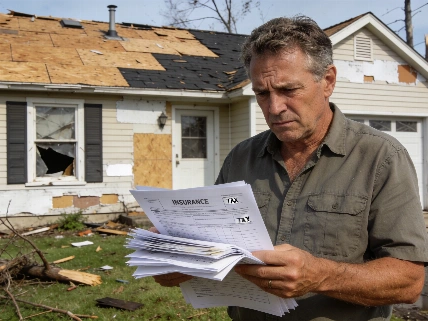

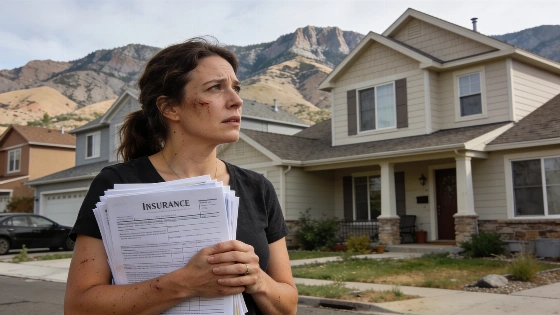
Utah homeowners entered 2025 facing a sharp increase in insurance policy nonrenewals, with 4.45% of policies discontinued-the highest rate in the country, according to data reported by KSL-TV. This means about one in 22 Utah homeowners lost coverage, outpacing California and Florida, which have long struggled with insurance instability tied to hurricanes and wildfires. The numbers are attributed to the National Association of Insurance Commissioners, but neither Utah regulators nor the NAIC have released the underlying dataset or methodology for public review.
California posted a nonrenewal rate of 2.93%, while Florida came in at 1.92%. Most other states saw less than 1% of policies dropped. Alaska reported the lowest rate at 0.40%. Rhode Island, Arizona, Arkansas, and Texas also had nonrenewal rates of at least 2%. These figures, based on reported data, point to a national trend of tighter scrutiny and reduced availability in the homeowners insurance market. The National Association of Insurance Commissioners remains the main source for these statistics, which highlight changes in insurance access across the US.
Natural disasters and rebuilding costs drive insurer exits
Several insurers have pulled out of Utah's market, citing natural disasters and rising rebuilding costs as key factors. Inflation has driven up construction expenses, and high lumber prices-linked in part to tariffs-have added to the strain. Tariffs dropped to about 35% on October 13, 2026, but insurance availability and pricing remain tough for homeowners. Industry observers point to the mix of higher catastrophe risk and increased rebuilding costs as reasons behind insurer decisions on renewals and market presence.
States like Rhode Island, Arizona, Arkansas, and Texas also saw at least 2% of policies not renewed, but Utah's rate topped the list for 2025. This pattern signals broader challenges for homeowners nationwide, as covered in an earlier breakdown of climate-driven insurance risks. Insurance markets in California and Florida operate under unique regulatory frameworks and face distinct catastrophe exposures, which can influence nonrenewal rates and consumer choices.
Options for homeowners after policy nonrenewal
When an insurer opts not to renew a policy, homeowners usually have one to three months to find new coverage, depending on Utah law and the policy's terms. The National Association of Insurance Commissioners provides resources to help consumers review their options. If private insurers decline coverage, many states-including Utah-offer Fair Access to Insurance Requirements (FAIR) plans. These policies often carry higher premiums and are generally considered a last resort. FAIR plan details differ by state, so Utah homeowners may need to check with the Utah Insurance Department or their mortgage lender to keep required coverage in place.
Homeowners expecting higher insurance costs might look into bundling policies, such as combining auto and home insurance with one provider, which can sometimes lower monthly bills. The availability and terms of these discounts depend on which insurers remain in the state. Official state filings and consumer notices have not detailed how many Utah homeowners lost coverage or secured replacement policies after nonrenewals. For more on insurance market trends and consumer resources, the National Association of Insurance Commissioners and the Utah Insurance Department offer further information.
This article draws on information originally published by Moneywise.com and is provided for informational purposes only, without warranty of any kind.