
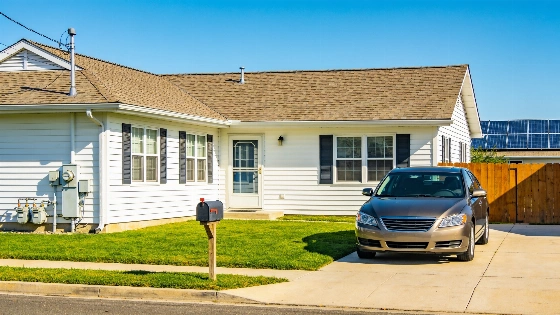
Annual non mortgage costs for homeowners now top $30,000 in several U.S. states, based on a recent Insurify analysis. Massachusetts, New Jersey, Connecticut, California, and Hawaii report the highest expenses, while the national average sits at $21,466 per year for costs outside of mortgage payments. The U.S. Census Bureau's American Community Survey tracks owner costs separately for households with and without mortgages, counting recurring expenses like real-estate taxes, property insurance, and utilities and fuels. Median monthly owner costs without a mortgage show wide variation: Census data for 2020-2024 lists $697 in Hawaii, $571 in Montana, and $442 in Louisiana. These numbers point to significant geographic gaps in non mortgage housing costs.
Non mortgage costs cover maintenance, utilities, property taxes, and insurance. The California Department of Real Estate points out that ongoing homeownership expenses go beyond principal and interest, typically including utilities, taxes, homeowner association dues, and maintenance. In California, property taxes are annual state and local charges based on assessed value, paid either directly to a county or through a mortgage servicer. The department also explains that first-year ownership costs can differ from later recurring bills due to Proposition 13 reappraisals. The analysis finds utility bills average $5,649 per year, property taxes reach $4,427, and maintenance costs total $7,374. Insurance premiums have driven recent increases, especially in South Carolina and Minnesota, where average home insurance bills jumped-by 41% to $3,264 in South Carolina and by 56% to $3,987 in Minnesota.
Insurance and regional differences
Florida posts the highest average home insurance bill at $8,486 per year. The report shows West Virginia has the lowest non mortgage homeownership costs among all states. Across the country, these expenses rose 2% year over year, though the analysis does not provide forecasts for future changes. The U.S. Census Bureau notes that its housing cost data are survey-based estimates and subject to sampling variability, so state-level comparisons require attention to the reporting period and methodology.
Insurify, an online insurance comparison platform, gathered the data using its own research and U.S. Census Bureau figures, which track national housing and household statistics. The Census Bureau's method for "Selected Monthly Owner Costs" adds up recurring expenses like real-estate taxes, insurance, utilities, fuels, and, when relevant, mortgage payments. The California Department of Real Estate states that a mortgage payment may include principal, interest, taxes, and insurance, but some costs may be paid separately by the homeowner depending on the lender and local practices. The Census Bureau's American Community Survey table B25088 separates households with and without mortgages, reporting, for example, a median monthly owner cost without a mortgage of $486 and with a mortgage of $1,790 in one five-year sample period. These numbers are location-specific and show why geographic context matters in understanding housing costs.
Budgeting for rising costs
Higher insurance premiums in states like South Carolina and Minnesota reflect broader shifts in housing and monetary pressures. Homeowners are advised to budget for utilities, property taxes, maintenance, and insurance also to mortgage payments. In high cost states such as Florida, where insurance premiums are especially steep, comparing policy quotes may help manage these expenses. The California Department of Real Estate recommends that prospective buyers plan for all recurring costs, including those that may not be included in a standard mortgage payment. For more on how these costs compare across states, see the earlier breakdown.
This article includes information reported by The Cool Down and draws on data from the U.S. Census Bureau and the California Department of Real Estate.