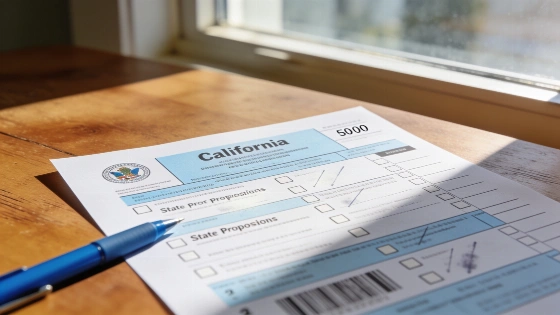
California's push to tax billionaire wealth hit a wall at the ballot box, even as progressive tax proposals advanced in other parts of the country. Proposition 40, which aimed to impose a one-time 5% tax on residents with net worth above $1 billion, was turned down by about 52%-53% of voters, with support at roughly 47%-48%, according to Associated Press reporting. The measure was projected to raise $100 billion, with about 90% of the funds set aside to offset federal healthcare cuts affecting programs like Medi-Cal, and the rest directed to education and food assistance. Most of the proposed revenue was allocated for healthcare spending.
Voters also passed Proposition 42, a measure that bars the state from creating new taxes on financial assets, business interests, retirement accounts, and intellectual property, and blocks any retroactive tax measures based on prior conduct, activities, status, or residency. Because Proposition 42 is written into the state constitution, only a future ballot initiative could reverse it, leaving lawmakers unable to change it through regular legislation. The measure leaves taxes on realized gains from asset sales untouched, but blocks new taxes based solely on owning personal property other than real estate.
Major spending and political divisions
The fight over Proposition 40 and support for Proposition 42 became one of California's most expensive ballot campaigns. Opponents reportedly raised over $333 million, with some estimates putting billionaire-backed spending close to $400 million. Major donors included Google co-founder Sergey Brin and other tech billionaires, and the broader opposition was described as heavily funded by wealthy technology and business leaders. The spending gap was about ten to one against Proposition 40, giving opponents a much larger budget for advertising, legal challenges, voter outreach, and turnout efforts. Governor Gavin Newsom joined other Democrats in warning that the wealth tax would be a risky financial move for the state. Opponents said the tax could create economic and administrative problems, especially in valuing illiquid assets, and could push billionaires and their tax payments out of California.
Backers of the wealth tax, including SEIU United Healthcare Workers West, U.S. Senator Bernie Sanders, and U.S. Representative Ro Khanna, said the measure would hold billionaires accountable and help protect funding for healthcare and other public services threatened by federal policy changes. After the defeat, Khanna called the election "just the beginning" for efforts to tax extreme wealth. The union behind the proposal had offered to lower the tax rate from 5% to 2% after pushback, but talks with Newsom's office stalled and the original measure went to voters. Divisions among labor groups and opposition from organizations like the California Teachers Association and Planned Parenthood Affiliates of California made the wealth tax campaign more difficult.
Broader context and future prospects
While California voters rejected the billionaire wealth tax, they did approve an extension of a tax hike on individual incomes above $371,000 to fund education. Other states saw progressive tax measures advance, including Washington, where voters upheld a 9.9% tax on household income over $1 million, and Colorado, which adopted a graduated income tax with higher rates for top earners. Legislatures in Hawaii, Maine, and Rhode Island also passed new taxes on incomes over $1 million.
California's dependence on high-income earners for tax revenue was a key argument for opponents, who warned that the wealth tax could push billionaires and their tax payments out of the state. David Kline of the California Taxpayers Association said the results showed voters recognized the risks of Proposition 40 and valued the protections in Proposition 42. According to Grant Thornton tax-policy analysis, Propositions 41 and 42 were structured to prevent Proposition 40 from taking effect if either countermeasure received more "yes" votes, even if the wealth-tax measure itself passed.
Divisions among labor groups and opposition from organizations like the California Teachers Association and Planned Parenthood Affiliates of California made the wealth tax campaign more difficult. Lorena Gonzalez, president of the California Federation of Labor Unions, said the ballot fight was only the start and called for renewed efforts in future elections.
National trends and California's next steps
Advocates for higher taxes on the wealthy plan to expand their campaigns in states where Democrats have recently gained legislative control. Amber Wallin of the State Revenue Alliance said interest in progressive tax policies is growing. Carl Davis of the Institute on Taxation and Economic Policy noted that, despite California's setback, supporters of taxing the wealthy have seen strong results nationally.
California's Proposition 42 now blocks new taxes on financial assets and retroactive tax measures, preventing proposals like the billionaire tax from applying to residents as of a past date. The Associated Press reported that the restriction can only be undone by voters with a future ballot measure. Governor-elect Xavier Becerra, who opposed the billionaire tax, acknowledged that the measure's support signaled public concern about tax fairness. He expressed interest in addressing the issue, though he did not outline specific plans. For more on Becerra's policy challenges, see this earlier report.