

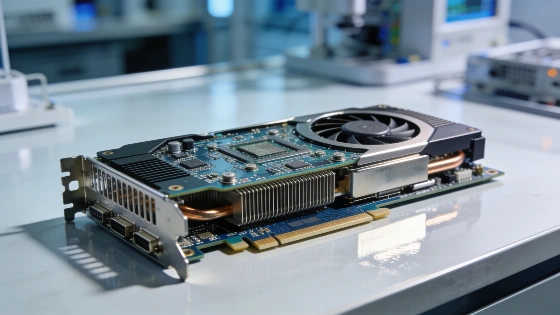
California's Department of Justice has opened an investigation into Nvidia, looking at whether the company or its former CEO, Jensen Huang, let advanced chip technology or confidential information reach China. The probe also checks if Nvidia gave investors and the public misleading information about these risks. The subpoena was served on November 19, 2026, in Oakland, as part of a fact-finding process to see if Nvidia's actions broke California law. The California Office of the Attorney General said the inquiry is not a formal finding of wrongdoing and does not point to a filed lawsuit or specific statutory provision.
Attorney General Rob Bonta announced the subpoena, pointing to "bright red flags" raised by Nvidia and its former CEO. In his statement, Bonta said the investigation will look at whether Nvidia or Jensen Huang's actions led to China getting sensitive technology or information, and if the company broke corporate securities law by failing to disclose these risks accurately. Bonta said, "My office is investigating whether Nvidia or Jensen Huang's actions resulted in China obtaining advanced chips or confidential information - and if Nvidia misled investors and the public about this risk, in violation of the law." The California Department of Justice clarified that the subpoena is a tool to evaluate possible violations, not an adjudication or enforcement action.
The California inquiry has two main parts: a technology-and-information inquiry and a securities-disclosure inquiry. Investigators are asking if Nvidia's advanced GPUs or confidential corporate information may have gone to China, and separately if Nvidia accurately disclosed the related risks to investors and the public. The matter surfaced after reports about Huang's alleged relationship with a woman suspected by the U.S. government of being a Chinese spy. The Department of Justice did not say that Huang personally transferred chips or confidential information, nor did it establish that the alleged relationship led to an actual disclosure. No criminal charge, intelligence finding, or judicial ruling confirming espionage or unauthorized technology transfer has been announced.
National scrutiny and upcoming testimony
The investigation comes as Nvidia faces more attention from lawmakers over its sales of advanced computer chips. On November 17, 2026, three U.S. House committee chairmen said that Jensen Huang and Nvidia General Counsel Tim Teter had voluntarily agreed to take part in transcribed interviews before Congress. The House Permanent Select Committee on Intelligence, House Foreign Affairs Committee, and Select Committee on the Chinese Communist Party scheduled Huang's interview for December 1 and Teter's for December 2. The stated congressional focus covers both Nvidia's role in access to advanced chips and the alleged involvement of a potential Chinese intelligence asset. Congressional leaders said, "The American people need answers on Mr. Huang and Nvidia's role in allowing dangerous PRC actors to access our most advanced chips."
As of November 19-20, 2026, California had announced the subpoena but had not made public any charges, court filing, penalty, or final determination against Nvidia or Huang. The subpoena's immediate effect is to require information relevant to the state's review of possible technology-transfer and investor-disclosure violations. No public response from Nvidia was identified, so the company's position on the subpoena is unconfirmed. The available official and major-news reports do not show a verified stock-price reaction, revenue impact, or quantified amount of technology allegedly transferred to China. Any claim that Nvidia technology actually reached Chinese intelligence or that investors were misled remains an allegation under investigation.
This development follows a pattern of increased scrutiny on technology companies with potential links to China, as seen in a previous investigation involving Super Micro Computer Inc. For further details, see the California Attorney General's official announcement and U.S. House committee statement.
For additional background, see ClickOrlando's coverage.