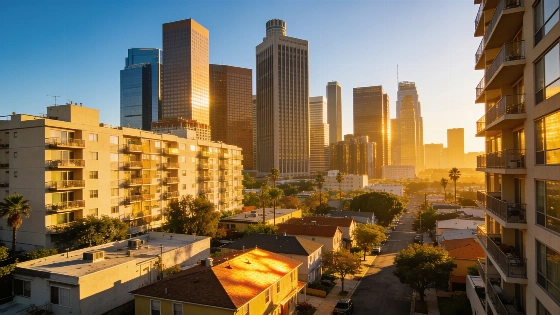
Los Angeles faces a shift in city leadership as Nithya Raman, a democratic socialist and former City Council member, steps into the mayor's office. Raman's win over incumbent Karen Bass in the November 3, 2026 election signals a new direction for the city, with her campaign focused on housing affordability and homelessness through faster construction and stronger tenant protections. The Los Angeles City Council District 13 confirms Raman will become the city's 44th mayor and its first South Asian mayor, with her inauguration set for December 14, 2026. The Los Angeles Times noted that Raman, who has served on the City Council since 2020, will leave her District 4 seat when she becomes mayor. The City Clerk's Office has yet to determine the cost or timing for a special election to fill her seat, though a late-spring election with a possible runoff is under discussion. Raman has called for a special election to address the District 4 vacancy.
Raman, who moved from India as a child and holds degrees from Harvard and MIT, entered city politics in 2020 after a grassroots campaign brought her to the City Council. Her experience in urban planning and her role co-founding the SELAH Neighborhood Homeless Coalition have influenced her policy focus. While representing District 4, she led the Housing and Homelessness Committee and became a prominent advocate for renter protections and affordable housing. Multiple outlets have described her as a democratic socialist and anti-establishment reformer, with her administration now under pressure from progressive supporters and institutional critics to show results on homelessness, public safety, and fiscal management.
Housing and Homelessness at the Forefront
Raman's main promise is to "build a city you can afford" by speeding up housing construction and aiming to triple the annual number of new homes built in Los Angeles. This goal matches state housing-planning expectations, according to Michael Lens, a UCLA professor of urban planning and public policy. Raman's plan includes stronger renter protections and a larger housing supply, priorities that appealed to younger and progressive voters during her campaign. Her campaign slogan focused on making Los Angeles "a city that works for everyone," with housing affordability, renter protections, homelessness, public transportation, and street safety as major themes.
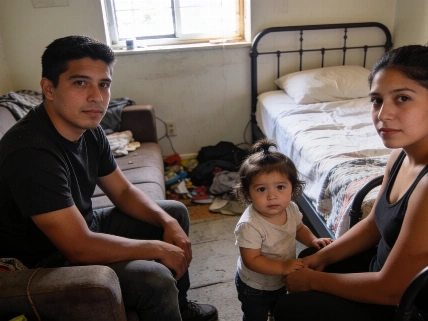
Homelessness remains one of the city's most pressing issues. The 2026 Los Angeles Homeless Services Authority (LAHSA) count found 45,194 people experiencing homelessness in the city, with 29,115 unsheltered and 16,079 in shelters or other temporary housing. The citywide total was 3.4% higher than in 2025, while homelessness across Los Angeles County rose 1.2%. LAHSA said neither increase was statistically significant and pointed to funding cuts that paused new enrollments in Time Limited Subsidies, a rapid-rehousing program, as a factor in stalled progress. Raman has pledged to cut street homelessness by at least half before the 2028 Olympic Games and to end long-term encampments by the end of her first term, using a baseline of more than 29,000 unsheltered residents. Her four-step plan starts with repurposing hotel rooms previously used for the Inside Safe program to stabilize unhoused residents and move them toward permanent housing. Her approach focuses on expanded rental subsidies and closer case management, moving people from interim accommodations into permanent housing instead of relying only on encampment enforcement. A campaign proposal would provide case-management support to help people experiencing homelessness find long-term housing within 90 days. Whether this target is realistic depends on available rental units, subsidy funding, case-management resources, and coordination with existing homelessness programs, especially given current funding limits.
Raman has also promised to withdraw Los Angeles from the Los Angeles Homeless Services Authority within her first year as mayor, a move that would bring a major administrative and governance change for the city's homelessness response. Such a step would raise questions about control of homelessness data, distribution of federal and state funds, contracting, coordinated entry, and responsibility for regional programs. During her transition period, no formal withdrawal decision or timeline has been set. The most visible deadline for her administration is the 2028 Olympic Games, with about a year and a half after taking office to show progress before the summer 2028 deadline, according to LAist reporting.
Public Safety and City Services
The Los Angeles Police Protective League previously backed Bass, but union spokesperson Tom Saggau has indicated a willingness to work with Raman as she takes office. Raman has said she will expand the number of trained crisis responders and behavioral health specialists in every neighborhood, aiming to free police officers from handling nonviolent 911 calls. She also plans to overhaul the city's call-categorization system to cut wait times for non-emergency services.
Raman's election puts her among a growing group of democratic socialist leaders in major U.S. cities, such as Janeese Lewis George in Washington, D.C., and Zohran Mamdani in New York City. Her win makes her the first Asian-American, Indian-American, South Asian, and Hindu mayor of Los Angeles. As reported earlier, housing advocates have called for immediate action on renter protections and affordable housing as Raman prepares to carry out her agenda. The transition period for her administration centers on turning campaign commitments into an initial governing program, with immediate operational milestones including staffing, deciding the future relationship with LAHSA, finding funding for rental subsidies and case management, and clarifying how encampment and permanent-housing targets will be measured. For more on her campaign and policy proposals, see Newsweek's coverage.