
Homeowners in Colorado who have struggled with high insurance costs due to wildfire and hail threats now have another choice. Stand Insurance has started offering coverage throughout the state, including in mountain areas where finding affordable policies has grown harder. The company ties premium discounts directly to wildfire mitigation work done on each property, a method it first used in California.
Stand Insurance says that in California, homeowners who followed its wildfire improvement recommendations saw premiums fall by up to 60%. The company expanded into Colorado after its initial launch in California, where it claims to insure over $10 billion in property. Stand handles its own underwriting and policy servicing in both states, with coverage issued by Concert Specialty Insurance Company, which carries an AM Best A- rating.
Individual Risk Assessment and Mitigation
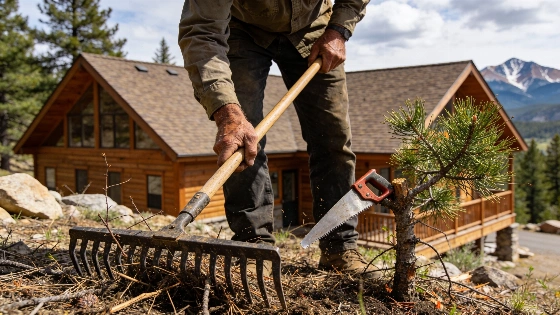
Stand takes a different approach from traditional insurers that often set prices by ZIP code. The company says its World Model uses physics-based simulation to analyze each home's wildfire risk. This model reviews the property, nearby features, and local conditions, simulating wildfire spread and pinpointing specific steps-like removing certain trees or adding vent screens-that could help a home survive. Homeowners who complete these steps get lower premiums, making mitigation central to how Stand sets prices.
According to Stand, model-test results from the 2025 Palisades and Eaton fires and the 2024 Thompson Fire showed its model correctly predicted survival for 84% of evaluated structures. By comparison, a leading traditional model based mostly on location predicted survival for 46%.
Colorado's Insurance Landscape and Regulatory Changes
Colorado's April 2026 state roadmap shows homeowner insurance premiums rose about 100% from 2018 through 2024, outpacing the national average of 58%. Wildfire risk makes up 1% to 25% of total premiums statewide, while hail accounts for a larger share-26% to 54%. Most residents pay more for hail than wildfire. Stand highlights Colorado Division of Insurance data showing wildfire makes up 22% to 25% of average premiums in Routt and La Plata counties, but only about 1% in Denver. Average annual premium savings from wildfire mitigation in Colorado have ranged from $3 to $25. Stand aims to change this by tying discounts more closely to improvements made on individual properties.
The company's move into Colorado follows the rollout of HB25-1182 in October 2026. This law requires admitted insurers and the Colorado FAIR Plan to factor in qualified, science-based mitigation in their wildfire-risk models or offer discounts to policyholders who complete such work. Insurers must also give notices explaining a property's risk score, how it's calculated, and how mitigation affects it. Policyholders can appeal scores and discount decisions. Insurers must publish information about available mitigation adjustments and discounts on their public websites, or state if discounts are not available.
The Colorado Department of Regulatory Agencies has scheduled a public rulemaking hearing before the Prescription Drug Affordability Board for December 11, 2026, under § 24-4-103(3)(a), C.R.S. This hearing does not relate to homeowners insurance but shows ongoing regulatory activity in the state. Details are posted on the Colorado Department of Regulatory Agencies website.
Direct Connection Between Mitigation and Savings
Stand's model sets up a direct link between mitigation work done on a home and the financial benefit for its owner. Whether the company's reported California discounts will lead to significant savings for Colorado homeowners is still uncertain, as is its ability to keep pricing and coverage steady in wildfire-prone areas.
For more background on how insurers are handling climate-driven risks and rising premiums, see the earlier breakdown.