
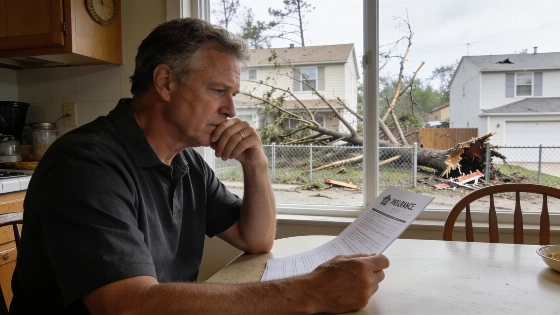
Across the United States, homeowners are seeing insurance premiums rise, yet many question whether climate change is driving these increases. The 2026 Insurance and Climate Change survey by Insurance.com found that just 43% of homeowners think climate change affects the home insurance market in their area. Another 32% do not see any link, and 25% remain unsure.
Industry specialists point to a direct relationship between climate risk and insurance pricing. The Congressional Budget Office has reported that flooding ranks among the most expensive natural disasters in the country, and that expected flood damage could worsen as coastal development continues and the climate shifts. This broader tie between climate hazards and public financial exposure is reshaping the insurance market, as insurers factor in the growing frequency and severity of natural disasters when setting premiums. Insurance rates also depend on rebuilding costs, claims severity, catastrophe reinsurance, underwriting rules, litigation, and state regulation, all of which interact with climate-related risks. The U.S. Department of the Treasury has addressed insurance affordability and access in the context of severe weather and disaster risk, but decisions on homeowners insurance rates are mainly made at the state level. For more on the federal perspective, see the Congressional Budget Office's analysis of flood adaptation spending.
Premium increases and homeowner perceptions
Insurance.com data shows the national average for home insurance has reached $2,872 per year. In the past year, 63% of surveyed homeowners reported a rate increase. Yet, fewer than half of those who saw their premiums rise—41%—attributed the change to climate risk. Many homeowners point to other factors, including inflation, construction costs, litigation, reinsurance, and claims frequency, as possible reasons for higher rates.
California stands out, with 55% of homeowners there believing that weather and climate contributed to their rate increases. Still, 33% of California respondents did not see a rate hike, and 32% saw an increase but did not link it to climate factors.
Coverage gaps and cost barriers
Even as natural disasters become more frequent, most homeowners have not increased their insurance coverage. The survey found that 69% made no changes to their policies. Only 9% increased coverage levels, 7% added flood insurance, and 4% added windstorm insurance. Cost remains a major barrier, with 10% of respondents citing expense as the reason for not expanding coverage. Rex Frazier, president of the Personal Insurance Federation of California, said, “People are still making the individual economically rational decision for how much insurance they can afford.”
Insurers are shifting more costs to policyholders through weather-specific deductibles. Nineteen states now use windstorm deductibles, and hail deductibles are becoming more common. For example, a 5% hail deductible on a $300,000 policy would leave a homeowner responsible for $15,000 in the event of hail damage. Seven percent of survey respondents reported having a hail deductible added to their policy, while 21% were unsure if such a deductible applied.
Access to coverage and state-backed plans
Natural disaster risk is making it harder for some homeowners to find insurance. Among those who recently shopped for coverage, 32% reported difficulty due to weather or disaster risk. In Florida and California, the challenge is even greater: 61% of Florida homeowners and 57% of California homeowners who shopped for insurance said it was harder to obtain coverage. Policy cancellations and nonrenewals are more common in these states, often because insurers are leaving high-risk areas.
Some homeowners have turned to state-backed insurers of last resort. In California, the FAIR Plan has seen its policy count triple since 2020. The survey found that 11% of homeowners said increased disaster risk forced them to use a state-backed insurer. These plans typically offer more limited coverage and may cost more than standard policies. In Florida, Citizens Property Insurance—the state’s insurer of last resort—has seen its policy count drop by 76% since 2023, helped by legislative changes and a quiet hurricane season in 2025.
What homeowners can do
While homeowners cannot control climate risk, they can take steps to reduce their financial exposure. Reviewing policy exclusions for flood, wind, and wildfire, comparing quotes annually, asking about mitigation discounts, and understanding deductible structures are all recommended actions. Homeowners unable to find private coverage are advised to check with their state insurance department about available state-backed programs.
The Insurance.com survey, conducted in fall 2026 with 1,252 insured homeowners by Dynata, highlights the gap between expert assessments of climate risk and homeowner perceptions. The story was produced by Insurance.com and reviewed and distributed by Stacker. For additional background on the intersection of climate hazards and insurance, see the CBO's insurance and disaster topics.