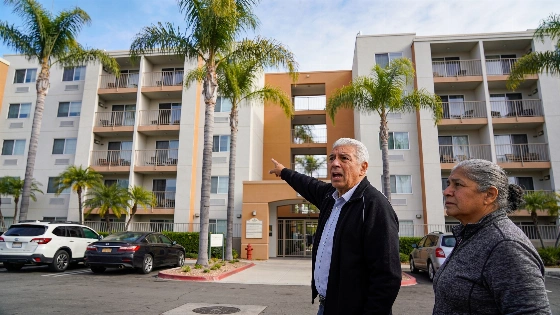
Residents at the Casa Lago apartment complex in east Chula Vista have reported months of worsening trouble—loud parties and threats, along with weapons—culminating in an October 14 fight that sent one person to the hospital with stab wounds and resulted in six arrests. Their calls for help reached the Chula Vista City Council, which responded with a unanimous vote to examine whether the city’s tenant protection rules should be updated to better address criminal and nuisance behavior in rental housing. So far, the city has not issued an official announcement or agenda item confirming next steps or the adoption of any new policy.
Chula Vista’s tenant protection ordinance, adopted in 2022, was the first in San Diego County to extend beyond state law in protecting renters from unfair evictions. The rules set standards for “no-fault” evictions, such as when a landlord wants to sell or renovate a property, aiming to prevent tenants who follow the law from losing their homes without cause. Still, the main legal standards for no-fault or just-cause evictions are set by California state law, and the official legislative database does not provide the text of the Chula Vista ordinance or clarify whether local rules add to, match, or differ from the statewide framework. For reference, California’s Civil Code section 1798.198 is available through the official state legislative database.
Concerns Over Legal Loopholes and Enforcement
After the violence at Casa Lago, both apartment owners and residents argued that some people are using legal protections to avoid eviction while engaging in criminal activity. Councilmember Michael Inzunza, who led the push for a review, said the council remains committed to protecting tenants who follow the law and wants to make sure city rules do not end up shielding those who put neighbors at risk.
Inzunza asked the city attorney to look at changes to the ordinance that would strengthen the city’s ability to address repeated nuisance activity and documented threats, as well as criminal conduct and hazardous living conditions. He pointed out that this issue is not limited to Chula Vista, noting similar problems across California. Inzunza described his approach as finding a balance between protecting responsible tenants and giving landlords tools to remove those who take advantage of the system.
Residents and Property Managers Respond
Nearly a dozen Casa Lago residents attended the council meeting, sharing stories of ongoing intimidation and what they described as a weak response from property management. Paul Martin, a resident, told councilmembers, “We are terrified. They threatened my life. They said they’ll beat us up and spit on us. This can’t be taken lightly.” Residents said they had called police many times and asked for better security, but saw little change.
Jorge Cabrera, representing Willow Bridge Property Company, which manages Casa Lago, stated that the owner has started eviction proceedings against the tenants in question but declined to discuss details. “We care deeply about our community and are committed to resolving the situation,” Cabrera said.
State and Local Law Complications
Molly Kirkland, public affairs director for the Southern California Rental Housing Association, explained that both state and local laws can make it hard for landlords to evict problem tenants. California’s statewide tenant protection act, passed in 2019, set strict rules for evictions related to nonpayment or criminal activity. Additional protections were added during the Covid-19 pandemic, and some cities—including Chula Vista—put even stronger local rules in place. The official California Legislative Information website provides statutory context for statewide regulations, but does not supply the text of any Chula Vista-specific ordinance or local exemptions. For more on California’s legislative framework, see the California Legislative Information database.
Kirkland said these overlapping laws have led to long eviction proceedings, sometimes lasting up to a year and costing landlords significant legal fees. She noted that even squatters or tenants who refuse to pay rent can claim protections if they present themselves as lawful tenants. Kirkland added that property owners sponsored state legislation last year to streamline evictions for problem tenants, but the bill did not advance in the Assembly.
Potential Changes Under Consideration
Chula Vista leaders outlined several possible changes to help landlords address serious tenant issues. These include delaying the start of certain tenant protections for up to a year, directing police to help landlords document problems, improving coordination among city departments, and creating a Neighborhood Protection Program to speed up eviction efforts. The status of any tenants, arrested individuals, property owner, or management company is not confirmed by official city sources, and no verified statistics on Chula Vista eviction filings, nuisance complaints, or tenant-protection enforcement have been published in recent administrative reports.
Inzunza said he hopes the city’s review will prompt a broader conversation about the tradeoffs in housing policy. He emphasized the need to focus on criminal elements and give law enforcement more authority to act quickly in eviction cases involving dangerous behavior. For further details on California’s legal standards, the official state legislative database provides access to relevant statutes.
For more background on the incident and the city’s response, see previous coverage.