
Los Angeles homeowners now face a complex set of legal and financial risks when they rent out single-family homes, as expanded tenant protections and eviction restrictions reshape the local housing market. Recent regulatory changes have left many property owners weighing whether leasing their homes is worth the potential complications and costs.
The Los Angeles Just Cause for Eviction Ordinance means lease expiration alone usually does not justify eviction. If a tenant pays rent and follows the agreement, the owner must cite a legally recognized reason to end the tenancy. Choosing to sell or reclaim the property for personal use often does not qualify. In some situations, regaining possession may require hiring an attorney, meeting government-approved criteria, and paying relocation fees that can reach tens of thousands of dollars. The exact relocation payment depends on factors like household size, income, disability status, tenancy duration, and whether the unit falls under a local or state program. Relocation assistance is typically triggered by no-fault terminations and is separate from other payments such as tenant buyouts or damages awarded after an unlawful eviction.
Expanded protections and shrinking incentives
Santa Monica voters passed Measure VV on November 3, 2026, extending just-cause eviction protections to single-family homes and condominiums. The measure passed with 62.61% support. Similar rules apply in Los Angeles, unincorporated Los Angeles County, Culver City, West Hollywood, and Pasadena, though exemptions differ. The specific ordinance names, covered properties, exemptions, and effective dates vary by jurisdiction, and local rules can differ for single-family homes, condominiums, owner-occupied buildings, newer construction, subsidized units, and properties subject to state law. Santa Monica's new rules require owners seeking to move in to do so within sixty days and stay for at least two years. These requirements, along with Los Angeles' expanded just-cause rules since January 2023, have made it harder for owners to recover their properties at the end of a lease.
During the COVID-19 pandemic, Los Angeles imposed strict eviction restrictions starting in March 2020. While the main nonpayment protections have expired, some repayment deadlines extend into 2024. Many landlords went months without rent while still paying mortgages, taxes, insurance, and maintenance. The city's COVID-19 renter protections guidance documents this period, which left a lasting impression on property owners about the risks of renting under government-imposed restrictions. The city's emergency tenant protections differ from county rules and from California's statewide COVID-related measures, as each program used different eligibility standards and deadlines.
Consequences for tenants and landlords
Landlords now face a dilemma: accepting a tenant can mean years of legal exposure and financial uncertainty. One Los Angeles landlord described the difficulty of relocating a tenant during major construction, even when offering to subsidize temporary housing. Other property owners demanded high income and significant savings from applicants, making it nearly impossible for tenants with imperfect credit or modest resources to secure a new rental. This experience, while anecdotal, shows how stricter regulations can lead to tougher screening and fewer opportunities for those most in need.
Groups most affected include restaurant workers with variable income and self-employed tradespeople, as well as single parents rebuilding credit or young families with limited savings. The economic mechanism is clear: when the risks of renting increase, landlords become less willing to take chances on applicants who do not meet strict financial criteria.
Documented impact on rental supply
Research supports the claim that rental regulations can reduce available housing. A 2019 American Economic Review study by Rebecca Diamond, Tim McQuade, and Franklin Qian found that San Francisco's rent-control expansion led affected landlords to reduce rental supply by about 15%. The resulting contraction increased citywide rents by 5.1%, according to the National Bureau of Economic Research. While protected tenants benefited, families searching for rentals faced fewer options and higher prices. The study focused on rent control, not Santa Monica's just-cause measure, but it shows how restrictive policies can shrink rental supply.
Santa Monica's Rent Control Board Annual Report for 2024 recorded 3,354 rental units withdrawn under California's Ellis Act since 1986, across 696 properties. Withdrawals occur for various reasons, but the figures show that owners do leave the rental business when regulations become too burdensome.
Legal and constitutional questions
Some homeowners have raised concerns about property rights, especially when new restrictions are applied to existing leases. Courts have generally upheld these regulations as prospective rather than retroactive, citing Supreme Court precedent such as Yee v. City of Escondido, 503 U.S. 519 (1992). The Constitution's Contract Clause and Fifth Amendment do not prohibit all housing regulation, but the fairness and practical impact of these rules remain contested among property owners.
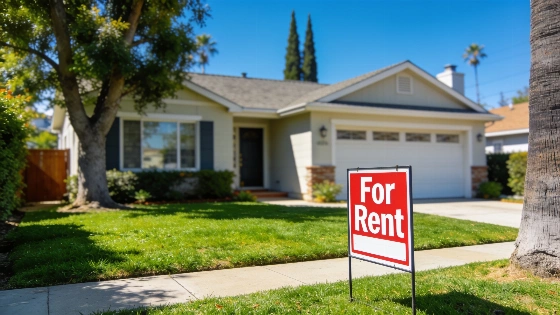
For those considering renting out a $1.3 million home for $5,000 a month, the risks now include potential litigation, lengthy delays in regaining possession, and mandatory relocation payments. The legal remedy for nonpayment or violations exists, but obtaining possession quickly is another matter. So, many owners are opting out of the rental market entirely.
Broader effects on housing availability
California's approach to tenant protection has created incentives that discourage homeowners from renting out their properties. The result is a shrinking pool of available single-family rentals, tougher screening for tenants, and fewer opportunities for families unable to buy. As noted in a recent report, legal disputes and regulatory changes continue to shape the landscape for both landlords and tenants in Los Angeles.
While tenant advocates argue that housing stability is essential, the current regulatory environment has made it increasingly unattractive for private homeowners to participate in the rental market. The result is fewer homes available for rent and greater difficulty for families seeking stable housing in Los Angeles.