
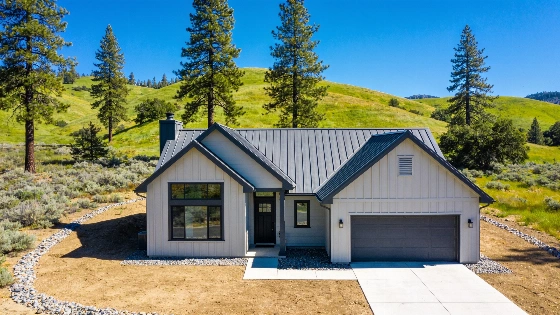
Across rural Northern California, families who have spent thousands to make their homes more resistant to wildfires find that insurance premiums often stay high. Even after installing metal roofs or ember-resistant vents, many residents say insurers provide only small discounts, if any, for these expensive upgrades. This pattern appears statewide. The California Department of Insurance acknowledges that mitigation steps can lower wildfire risk, but actual premium reductions depend on the property, the specific actions taken, and how each insurer sets rates. The Department says, "the safer your property is from the risk of wildfire, the more you can save," yet discounts vary and may require paperwork or inspection before they take effect at the start of the next policy period. More details are available in the Department's Safer from Wildfires FAQ.
Insurance companies face mounting pressure as wildfires grow more frequent and destructive. To study how homes withstand disasters, major insurers fund research at a destruction lab in South Carolina. Researchers there ignite mock houses and expose them to harsh weather, looking for evidence on which building designs and materials actually cut risk. This approach recalls earlier work by Underwriters Laboratories in the early 20th century, when scientists tested electrical wiring and appliances to reduce fire hazards. The Insurance Institute for Highway Safety uses similar crash tests to influence auto design.
Minimal discounts for wildfire safety investments
Some California homeowners, especially in towns like Paradise, have worked to strengthen both individual houses and entire communities against wildfire. Yet, as a recent investigation found, insurance discounts for these efforts are often small. This raises questions about whether the market fails to reward risk reduction or if insurers' calculations reflect the limited savings on wildfire claims.
Even as residents invest in safety, many see fewer options for coverage. Insurers have increasingly declined to renew policies in high-risk areas, pushing families onto California's FAIR Plan, the state's insurer of last resort. The California Department of Insurance says FAIR Plan residential policyholders can get discounts on the wildfire portion of their premiums if they harden their properties, but the savings depend on the property and mitigation steps. There is no single statewide percentage reduction, and upgrades like ember-resistant vents, defensible space, or fire-resistant roofing may bring modest or inconsistent premium savings. Homeowners should contact the FAIR Plan directly for details on available discounts and required paperwork. The Department confirms these mitigation incentives apply in the residual market as well as with admitted private insurers. More information is in the California FAIR Plan consumer guidance.
Regulatory challenges and market pressures
California's insurance regulations, shaped by Proposition 103 in 1988, require state approval for rate increases and force insurers to base rates on past wildfire losses instead of forward-looking catastrophe models. UC Berkeley economist Nancy Wallace says this system kept premiums artificially low and may have encouraged more development in fire-prone regions. As wildfire losses grew, insurers found the economics unsustainable and began leaving the market. Wallace attributes much of the current crisis to regulatory limits that stopped insurers from adjusting rates to match rising risks.
Regulatory changes in late 2024 now let insurers use models that project future wildfire losses, provided they expand coverage in high-risk areas. This shift aims to make insurance more available, though it could also mean higher premiums for many homeowners. UC San Diego economist Judson Boomhower told Planet Money that a sign of a "healed" market may be higher prices, reflecting the real cost of insuring homes in wildfire zones.
In September 2026, the California Department of Insurance put the Safer from Wildfires framework in place, requiring insurers to formally include wildfire mitigation steps in their rate filings for both residential and commercial policyholders. Under this framework, insurers must provide a property's wildfire risk score when a consumer applies, renews, or asks for the score after completing mitigation work. Policyholders may need to submit paperwork or have an inspection, and approved savings show up at the start of the next policy period. The Department also notes that the value of mitigation discounts is now actively negotiated through rate-approval procedures, and consumer advocates can challenge how insurers account for mitigation in their filings, as seen in a 2026 proceeding involving Consumer Watchdog and Stillwater Insurance Company.
California law also gives temporary non-renewal and cancellation protections after officially declared wildfires. Insurance Code section 675.1, created by Senate Bill 824, generally bars insurers from cancelling or refusing to renew residential property insurance in ZIP Codes within or next to a fire perimeter for one year after a state-of-emergency declaration, when the decision is based only on the wildfire event. As of January 1, 2026, these protections expanded to include commercial property insurance, according to a Department of Insurance bulletin. However, these rules address only post-disaster cancellations, while separate underwriting, pricing, and catastrophe-model decisions still shape whether policies are offered and at what cost.
California's broader insurance-access strategy now links mitigation and insurability as policy goals. In November 2026, Insurance Commissioner Ricardo Lara announced a Sustainable Insurance Roadmap, which includes wildfire-risk assessment, resilience standards, home-hardening programs, and community mitigation. The initiative features the development of the nation's first Public Wildfire Catastrophe Model to inform risk assessment and land-use planning, and a statewide Wildfire Mitigation and Home Hardening Grant Program for income-eligible Californians. The Department emphasizes that mitigation must happen at both the individual-home and community level, as insurers evaluate broader wildfire exposure, not just a single property.
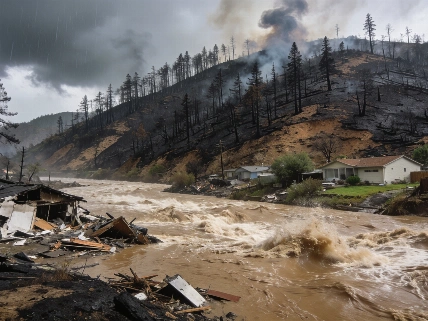
With El Niño bringing more rain this winter, some Californians hope for a short break from fire worries. Still, the Department of Insurance warns that standard property policies usually exclude losses from flood, mudslide, and debris flow-hazards that can follow wildfires. Homeowners who invest in wildfire hardening may still face coverage gaps for these related risks unless they buy separate protection or qualify for another insurance option. The core challenge of finding affordable, reliable home insurance in wildfire country remains unresolved for many households.