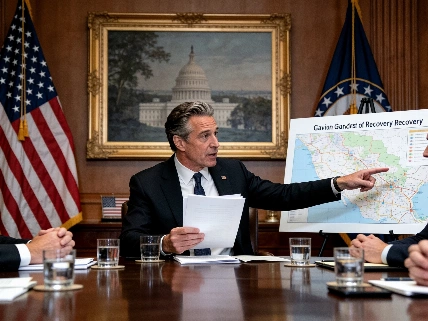

Governor Gavin Newsom headed to Washington, D.C., this week to press for nearly $13 billion in supplemental federal aid for communities hit hard by last year's Southern California wildfires. The revised request, now at $12.98 billion, focuses on housing, infrastructure, and public services in areas still working to recover from the Eaton and Palisades fires. The Governor's Office says the updated proposal was shaped with input from local governments and residents to address the most urgent recovery needs after the January 2025 firestorms. The largest share, $8.4 billion, would come from Community Development Block Grant-Disaster Recovery (CDBG-DR) funds, aimed at home construction, repairs, and disaster-resilience projects. Congress has yet to act on the package, and Newsom is urging the 119th Congress to approve it before the December adjournment (Governor's Office announcement).
Newsom met with congressional leaders from both parties, including House Minority Leader Hakeem Jeffries, Rep. Rosa DeLauro, California Senators Alex Padilla and Adam Schiff, and Republican lawmakers Rep. Ken Calvert and House Appropriations Chair Tom Cole. In letters to House and Senate leadership, Newsom stressed the need to move quickly, arguing that disaster survivors should not have to wait for a new legislative session. The Governor's Office described the meetings as bipartisan and focused on making the case for recovery aid directly to Congress.
Breakdown of California's revised aid request
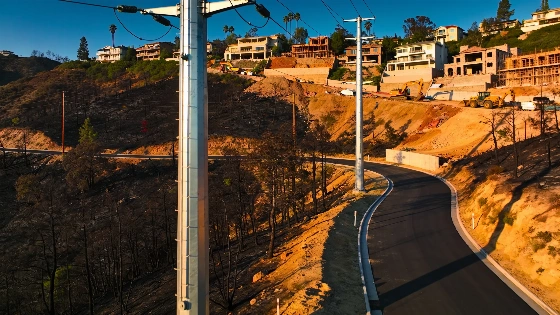
The proposal includes $8.4 billion for rebuilding homes and key infrastructure, such as hillside stabilization, roadway repairs, and upgrades to power distribution systems. This CDBG-DR funding is meant to close gaps in home construction and repairs, fix essential infrastructure, and help shield communities from future disasters. Another $2.5 billion is set aside for eligible FEMA Public Assistance projects, covering the replacement of destroyed schools and repairs to fire hydrants, as well as restoring libraries, community centers, and parks. More than $750 million is proposed for hazard mitigation projects to reduce future disaster risks.
Other allocations in the request include $759 million for drinking-water and wastewater recovery, such as fixing damaged drinking-water systems, restoring stormwater infrastructure, and improving wastewater resilience. The proposal seeks $240 million for rebuilding and repairing child-care facilities, supporting families returning to work and helping communities recover. Another $179 million is designated for Economic Development Administration grants to support small businesses, workforce training, economic recovery, and commercial corridors. These figures reflect proposed federal allocations and have not yet been approved or distributed by Congress or federal agencies.
Newsom is also pushing to raise federal property loan limits for affected residents and to secure more flexible disbursement and repayment terms. The revised request is about a third of the nearly $40 billion initially sought in early 2025, after a series of reductions as priorities shifted. California's funding mechanisms include HUD's Community Development Block Grant-Disaster Recovery program, FEMA Public Assistance, hazard-mitigation funding, drinking-water and wastewater recovery programs, child-care reconstruction, and Economic Development Administration grants, each with its own federal administrative process.
Political tensions and federal response
During his visit, Newsom criticized President Trump for what he called insufficient support for wildfire survivors in California, Texas, and North Carolina-states that have all faced major disasters in recent years. The White House, through spokesperson Lauren Bis, pushed back, blaming what it described as "horrible mismanagement of the L.A. wildfires and recovery efforts" at the state level for delays. Bis said the Trump administration has already obligated billions in supplemental aid and extended assistance periods for homeowners and renters.
Newsom's push comes as some Southern California House members hope the incoming Democratic majority in Congress will improve the odds for federal action. The Governor's Office said the goal of the funding request is to help wildfire survivors return home and rebuild, with the timeline for action considered urgent as the 119th Congress nears adjournment in December. The official California release, published November 17, 2026 and updated November 18, 2026, confirms that the supplemental recovery funding request is still pending before Congress (Governor's Office press release).
For more on California's wildfire recovery policies, see this earlier report and coverage from the Southern California News Group.