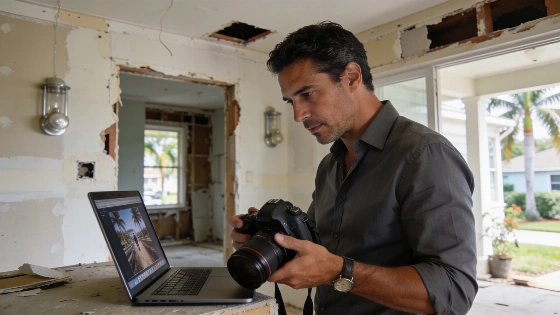
Artificial intelligence edits that hide property flaws have drawn attention to ethical lines in Florida's real estate market. Orlando photographer Kismet Davis said some clients asked him to digitally turn bare dirt into green lawns or cover up unfinished repairs in listing photos. Davis told News 6 he declined these requests and offered to return after repairs were finished. He said he uses AI for color consistency but stops short of edits that would mislead buyers about a home's real condition. "I don't want to misrepresent what the buyer or tenant might see when they get there. It makes us all look bad if they waste their time driving to some place and it's not what they thought it was going to be," Davis said, according to News 6.
Florida's real estate advertising falls under Florida Administrative Code 61J2-10.025, which bars any advertisement by a licensee from being fraudulent, false, deceptive, or misleading. The rule requires advertising to make clear the public is dealing with a real-estate licensee and generally mandates the licensed brokerage's name appear near contact information. These rules apply to internet advertising, including digitally altered listing photos, and back enforcement against edits that falsely suggest completed repairs, changed property dimensions, fake views, or other physical features. Florida Statutes §475.25 lets the Florida Real Estate Commission discipline licensees for false, deceptive, or misleading conduct in real-estate practice, even if the misleading edit appears only in marketing and not in the purchase contract. A disclosure that an image was edited does not always fix an image that materially misrepresents the property, especially if the change hides damage or creates a feature that does not exist.
Virtual staging is allowed in some situations. RE/MAX Signature agent Shannon FitzPatrick supports using digital tools to help buyers picture how empty rooms could look furnished, as long as the images show the property accurately. "You want it to be real, but use the tool to kind of give people a creative idea of what could be," FitzPatrick told News 6. Industry guidance in Florida separates adding removable furnishings from altering facts a buyer would expect to see at the property. Virtual staging helps show how an empty room might look with furniture, but edited photos should not misrepresent room size, permanent finishes, views, improvements, or physical condition. Digitally altered images should be presented clearly and should not misrepresent permanent features, condition, room size, or improvements that do not actually exist.
Buyer experiences and warning signs
Homebuyer Bruce Walck described visiting properties that looked very different from their online photos. "When you get there, it's like, whoa, whoa, wait, it doesn't look anything like that," he said to News 6. Davis pointed out that AI-generated edits can sometimes create odd results, such as garbled house numbers or unnatural colors, which may hint at manipulation. Visual warning signs for buyers can include heavy contrast or distorted text and house numbers, though these alone do not prove manipulation. Consumer-protection guidance in Florida advises sellers and listing professionals to identify virtually staged or digitally modified images while making sure the property is accurately shown. Buyers are encouraged to read listing descriptions for virtual-staging notices, compare still photos with video or 3D tours, and ask the listing agent if an unclear feature was digitally altered and whether it exists at the property.
Besides the risk of misleading buyers, AI-powered editing depends on energy-hungry computing infrastructure. Research cited by Project Celsius finds that generating a single AI image can use about 2.9 watt-hours of electricity, roughly 15% of a typical 19-watt-hour phone battery. The environmental impact changes with the model, hardware, and resolution, and water use may include both direct cooling and indirect water from electricity generation. On a global scale, projections from the University of Navarra, referencing work by Shaolei Ren, estimate that AI-related water withdrawal could reach 4.2 billion to 6.6 billion cubic meters in 2027, though this figure includes indirect water use and is not specific to real-estate photo editing.
Industry rules and compliance efforts
Stellar MLS, a major multiple listing service in Central Florida, allows virtual staging but bans edits that hide damage, change permanent fixtures, enlarge rooms, or create views that do not exist. Virtual staging is also not allowed for properties still under construction or not yet built, since there is no finished space for the image to show. The service uses Listing Data Checker and Restb.ai technology to flag possibly noncompliant images. Real estate professionals can submit confidential reports of possible violations for staff review. "Disclosure does not make an otherwise misleading edit permissible," Stellar MLS stated to News 6. According to Stellar MLS, virtual staging is allowed only when it stays accurate and does not hide or invent material property characteristics. MLS compliance systems are increasingly using automated image screening to spot manipulation before or after publication, rather than relying only on complaints from buyers or competing agents. Misleading images can trigger correction requests, compliance review, and possible consequences under MLS rules or Florida licensing law.
Davis suggests that buyers read listing descriptions for virtual staging disclosures and compare photos with video or 3D tours, which are harder to fake. He also recommends checking exterior photos against Google Street View or similar services. Before scheduling a showing, buyers can ask agents if any features were digitally altered and confirm important details in person.
Concerns about AI-altered property photos are not limited to Florida. In other places, buyers have reported images that removed radiators, showed impossible layouts, or staged features that did not exist. For more on how climate risks are affecting home insurance and real estate practices, see this related report. For more background on the environmental impact of AI image generation, see Project Celsius reference figures.
For further details on Florida's real estate advertising regulations, readers can consult the Florida Administrative Code 61J2-10.025.