

Wildfires in California and hurricanes in Florida now push financial consequences far beyond the immediate disaster zones. Homeowners in states that haven't seen recent storms still face rising insurance bills, a result of how risk is pooled and priced throughout the insurance industry.
Quartz reports that reinsurance-the coverage insurers buy to protect themselves from catastrophic losses-has become much more expensive. After major storms, reinsurers raise their prices, and these added costs land on homeowners through higher premiums. This setup means disasters in one region can affect insurance rates for properties in areas considered relatively safe.
State markets under pressure
Florida's property insurance market shows how severe the strain can get. Several insurers there have gone insolvent, according to Quartz, with Hurricane Ian forcing many policyholders to rely on the state's backup insurer. As private companies leave or collapse, customers left behind see less competition and higher costs.
In California, wildfire risk has led major insurers like State Farm to stop writing new policies, leaving buyers with fewer private choices. When private coverage disappears, homeowners must use state-run plans, which often come with different terms and pricing structures.
Changing coverage and rising deductibles
Severe hailstorms are also changing insurance terms. Insurers are moving toward percentage-based hail deductibles, Quartz notes, which shift more repair costs onto homeowners. Roof replacements after convective storms have become especially costly under these updated rules.
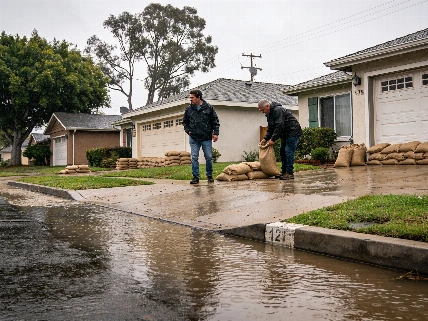
Flood insurance brings its own set of challenges. Standard homeowners policies exclude flood damage, a gap highlighted by the U.S. Government Accountability Office. Most U.S. households lack flood insurance, even though flooding is the most frequent and expensive natural disaster nationwide. The National Flood Insurance Program (NFIP), run by FEMA, remains the main federal option for flood coverage, but participation is low. Development in flood-prone areas and changing climate conditions have increased exposure. The GAO points out that a lower homeowners premium does not guarantee a household is protected against catastrophe losses, since flood damage is usually not covered by standard policies. GAO flood-insurance analysis.
FEMA's Risk Rating 2.0, which took effect for new NFIP policies on October 1, 2021, and for renewals on April 1, 2022, changed how federal flood insurance premiums are set. The new approach replaces older methods based on flood zones and elevation certificates with property-specific factors like rebuilding cost, distance to water, flood frequency, and multiple flood hazards. FEMA says Risk Rating 2.0 aims to distribute premiums more fairly, but it also means higher premiums for some properties while capping annual renewal increases at 18 percent for most policyholders. The rollout has drawn political and legal scrutiny, including demands for more transparency about the catastrophe models used. More details are available from FEMA Risk Rating 2.0.
FEMA has also made it possible to buy NFIP policies directly online, letting consumers get quotes and purchase coverage through FloodSmart.gov. This gives homeowners another way to secure coverage in a market where insurance agents have usually handled distribution. Still, premiums, deductibles, waiting periods, coverage limits, and eligibility differ by property and policy.
As covered in a previous article, the way insurance works means that catastrophic events in one region can push premiums up across the country. Homeowners should check their coverage limits and deductible amounts to avoid surprise expenses after a major storm. It's also necessary to know the difference between federal flood insurance and state-regulated homeowners coverage, since wind, wildfire, hail, and hurricane coverage are set mainly by state insurance rules and individual insurer filings, each with its own underwriting and regulatory process.
For California residents, especially those in wildfire-prone areas or along the Central Coast, knowing the difference between homeowners and flood insurance is crucial. After a hurricane or major storm, property owners may have to deal with two separate insurance markets: one for wind or structural losses and another for flood coverage. This can lead to confusion in claims disputes when both types of damage happen during the same event.