Wildfire risk has pushed the insurance industry to make major adjustments. State Farm stopped writing new homeowner policies in California last year and sought emergency rate hikes after the Eaton and Palisades wildfires. The insurer now looks to technology to try to limit future losses.
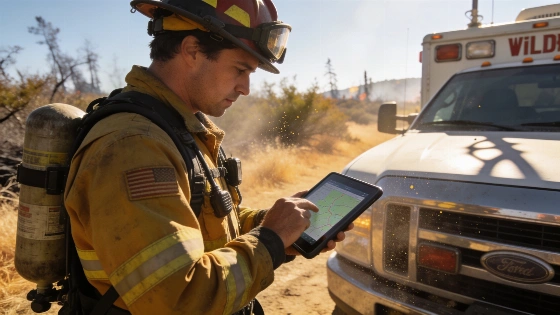
State Farm, headquartered in Bloomington, announced an investment in Emberpoint, a wildfire intelligence company launched this year. On November 6, 2026, Emberpoint said State Farm had joined its investor group, which already included Lockheed Martin, PG&E Corporation, Salesforce, and Wells Fargo. Emberpoint claims its technology delivers "decision-ready intelligence" to fire agencies during the first hours of a wildfire, aiming to help emergency responders move resources faster when homes and neighborhoods are at risk. The company says it focuses on speeding up resource deployment and supporting near-real-time perimeter mapping for incident commanders. Emberpoint's technical model brings together wildfire information from multiple systems and agencies, instead of relying on a single data stream. The platform's listed features include near-real-time fire-perimeter mapping and resource-allocation tools, and its open architecture is meant to connect with existing emergency-response systems. A council of former fire chiefs advises product development to keep the platform aligned with operational needs in the fire service. Emberpoint says the platform is built to give firefighters "a clearer understanding of developing wildfire conditions" and help them make faster operational calls. The company planned to work with investors and fire-service leaders to set response priorities and link its system with tools agencies already use. As of November 2026, Emberpoint was still building out its wildfire-intelligence platform and had not been described as a mature, widely used public-safety system. No launch date, named municipal customers, or independently audited effectiveness results have been released. Fire and Safety Journal Americas covered the investment and Emberpoint's development plans.
With this step, State Farm joins investors including Lockheed Martin, Pacific Gas and Electric (PG&E), Salesforce, and Wells Fargo. Emberpoint calls these backers a "cross-industry coalition" supporting its goal to improve wildfire response with advanced data and coordination tools. Kate Strubhar, Vice President of State Farm Ventures, said, "Reducing wildfire risk requires attention to individual properties and the surrounding community," and described the investment as supporting technology meant to give responders timely information while coordinating wildfire operations.
Wildfire risk and insurance challenges
Wildfires have become a bigger business risk for insurers in California. In 2023, State Farm stopped offering new homeowner insurance policies in the state, citing wildfire losses. After the Eaton and Palisades wildfires in 2025, the company requested a 22% emergency rate increase for existing California policyholders. That move triggered a state investigation and a lawsuit from Los Angeles County over State Farm's handling of wildfire claims. The insurer has denied allegations of delays, underpayments, and denials related to those claims.
California's insurance market has come under pressure from rising wildfire claims, inflation, and higher reconstruction costs. Major carriers such as State Farm, Allstate, and Farmers began pulling back or limiting new business in California, arguing that the state's rate-approval process was too slow or restrictive for the risks they faced. This market strain has combined insurer solvency concerns with homeowner worries about premium hikes and shrinking coverage options. Regulatory disputes over settlements and emergency rate relief have become part of a larger debate over how quickly insurers can reprice climate-driven property risk. According to a Yahoo News report, the market strain has been linked to "inflation, a rise in construction costs and rising wildfire claims."
California's insurance-rate dispute is shaped in part by Proposition 103, the 1988 ballot measure that gives the insurance commissioner power to review property-insurance rate increases. In May 2026, California Department of Insurance officials reportedly filed a formal Accusation and Order to Show Cause against State Farm over its handling of claims from the Eaton and Palisades fires, citing violations in 430 claims and seeking between $2 million and $4.3 million in fines, with the possibility of a one-year suspension of State Farm's California license. The case had not reached a formal hearing at the time of reporting. In November 2026, State Farm reached an agreement for a 17% increase in California home-insurance rates, involving a $530 million emergency increase negotiated by Insurance Commissioner Ricardo Lara and sent to a judge for approval. Legal reporting described the Department of Insurance's action as an unprecedented emergency approval made before full actuarial justification, meant to provide interim financial relief while the insurer's broader rate justification remained under review. Daniel Veroff, an attorney at Merlin Law Group, called the action "a regulatory watershed" that could reshape insurers' responses to climate-driven market instability, according to the Los Angeles Times.
According to Emberpoint's news release, the company's technology aims to help first responders make faster, more informed decisions during wildfires. State Farm described its investment as part of a broader effort to support "solutions that can help protect homes and communities before disasters strike." The company said, "Through Emberpoint, we're working alongside companies from different industries to advance technology designed to give first responders better information during the critical early hours of a wildfire, helping them make faster, more informed decisions." State Farm also stated that the investment supports "the development of technology intended to give emergency responders timely information as they assess wildfire conditions and coordinate their response."
National response and legislative efforts
The wildfire problem is large in scale. The National Interagency Fire Center reported that in 2025, more than 77,000 wildfires burned across the United States, destroying over 18,000 structures, including nearly 13,000 homes. Emberpoint cited these numbers to show the need for better coordination among agencies and responders.
Efforts to improve wildfire intelligence are also moving forward in Congress. A group of U.S. lawmakers, led by Sen. Alex Padilla of California, is working to set up a collaborative body to gather and share wildfire data. The bill is now before the Senate Committee on Agriculture, Nutrition and Forestry.
While State Farm's headquarters in Bloomington faces less wildfire risk than much of California, the company noted that drought and dry conditions can raise fire danger even in areas not usually linked to wildfires. State Farm emphasized that changing risks mean communities across the country need to prepare for possible disasters.
For more on wildfire recovery and community rebuilding efforts in Los Angeles County, see this earlier report.