
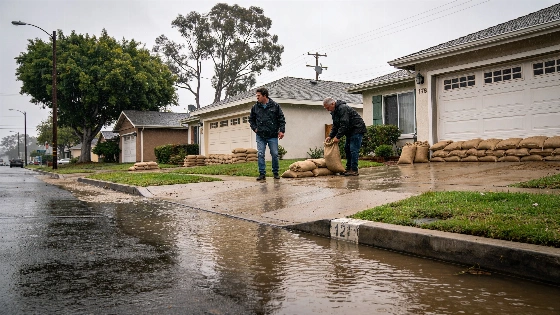
California heads into winter with the threat of record flooding, yet most homes in the state's highest-risk flood zones remain without flood insurance. This leaves many households financially exposed if disaster hits. Data provided to KQED by Insurify shows that 65% of the 183,000 homes in FEMA-designated high-risk flood areas across California do not carry a National Flood Insurance Program (NFIP) policy.
The National Flood Insurance Program (NFIP), run by FEMA, stands as the main federal option for residential flood coverage in communities that participate. FEMA separates flood damage from standard homeowners coverage, so most property insurance policies exclude protection against flood losses. Homeowners in high-risk areas should review their coverage and weigh the benefits of NFIP policies, which are available in participating communities throughout California. Details about the NFIP and flood insurance options are available on FEMA's official flood insurance page.
Climate scientist Daniel Swain, writing on his Weather West blog, has pointed out that coastal flooding is already increasing and will intensify, with risks climbing around December. Higher ocean temperatures have pushed sea levels up, causing erosion and flooding along the coast. The combination of king tides and winter storms could bring widespread, possibly historic, flooding events.
Insurance Gaps and Consumer Misconceptions
Many homeowners do not realize that standard property insurance excludes flood damage. Matt Brannon, senior economic analyst at Insurify, says this misunderstanding is common. In a 2024 industry survey, more than half of respondents did not know that flood damage is not covered by typical homeowners policies. Brannon's analysis found that in Santa Clara County, 74% of high-risk homes lack federal flood insurance, with similar gaps in Solano, Contra Costa, and Sonoma counties.
The financial risk is significant. The Federal Emergency Management Agency estimates that just one inch of water in a home can mean $25,000 in repair costs. Despite this, many at-risk Californians have not bought flood coverage. Brannon said, "We wanted to get an idea of how many homes in flood areas in California have insurance coverage for flooding specifically. And it turns out that the majority of people in these high-risk areas do not have flood insurance, about two-thirds of them."
How to Assess and Secure Flood Coverage
Homeowners can check their flood risk by entering their address into the FEMA Flood Map Service Center. Flood insurance is available through the NFIP or private insurers, and some companies offer a "flood endorsement" as an add-on to existing policies. Federal policies require a 30-day waiting period before coverage starts, so acting quickly is important before the winter storm season arrives.
United Policyholders, a California-based consumer advocacy group, advises comparing quotes from both federal and private insurers. NFIP policies cover up to $250,000 for structural repairs and, for an extra premium, up to $100,000 for personal belongings. These policies do not cover temporary living expenses if a home becomes uninhabitable. Some private policies may include this benefit.
Renters and Vehicle Coverage
Standard renters insurance does not include flood protection, but renters can buy separate flood policies for their belongings. Landlords' insurance usually covers only the building. For vehicles, only comprehensive auto insurance covers flood damage. Brannon estimates that about half of drivers in the state have only basic auto coverage, which would not pay for flood-related losses.
Federal disaster assistance is rarely available for flood damage unless a presidential disaster declaration is issued. Even then, aid usually comes as loans that must be repaid with interest. Flood insurance payouts, by contrast, are not loans and do not require repayment.
For a broader look at how insurance markets are reacting to disaster risks, see what was reported earlier about policy nonrenewals in other states.