Voters in the United States handed Democrats a series of statehouse wins, flipping a dozen legislative chambers and giving the party full control in six states. These changes are already shaping urban policy, especially in housing and transportation, as state legislatures increasingly set rules on issues ranging from healthcare to labor and gun laws.
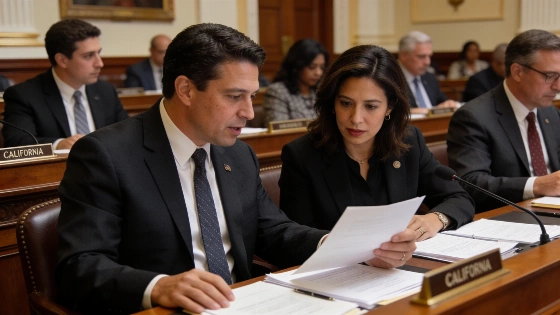
National headlines tracked the new balance of power in Congress, with Democrats projected to hold about 260 House seats and 54 to 56 Senate seats. Yet, the most direct effects for cities are surfacing at the state level. Democrats, who usually perform well in urban districts, are expected to push government-backed approaches for housing and homelessness. Republicans often focus on suburban and rural priorities. Still, party lines blur in practice. In California, YIMBY Democrats have worked to loosen housing construction rules, facing pushback from both Republicans and some Democrats. California's legislative records confirm that housing and land-use debates have continued through bill drafting, amendments, and committee hearings, including Assembly Bill 1070, amended on April 3, 2025, and again on January 5, 2026, and Senate Bill 1477, which had a committee hearing set for November 12, 2026, according to the California Legislature.
Housing affordability and ballot measures
Housing costs remain a top issue in major cities, with affordability driving policy fights. In July, the president signed the bipartisan ROAD to Housing Act, aiming to cut federal regulations that limit housing construction. Congressional Republicans have called for changes to the housing finance system, arguing that current rules keep banks from investing in the housing market. Democrats continue to push for more federal subsidies for affordable housing programs.
California voters turned down Proposition 45, a Chamber of Commerce-backed plan to broadly change the California Environmental Quality Act (CEQA) and speed up approvals for key projects, including housing. The measure failed 56% to 43% after opponents said it would allow polluting factories and data centers. However, voters passed Proposition 1, an $11.25-billion housing bond, by 61% to 39%. This bond will fund subsidized housing projects, though its effect on the state's affordability crisis is still unclear. Other states and cities also passed similar housing bonds, a trend covered previously.
At the federal level, the 21st Century ROAD to Housing Act (H.R. 6644) was introduced in the 119th Congress as a 2025-2026 bill. The measure would require the Department of Housing and Urban Development to publish guidelines and best practices for state and local zoning systems that support enough housing production and opportunities for households across income levels. The bill also proposes changing Community Development Block Grant allocations based on local housing growth, with extra funding for jurisdictions reaching annual growth above 4% and a 10% cut for those below the median growth rate. It would expand some affordable-housing eligibility from 80% to 100% of area median income. The proposal shows a federal strategy using housing-production incentives and zoning guidance, rather than relying only on direct construction subsidies. For more, see the official bill record from the U.S. Congress.
Transit funding and urban services
Public transit agencies in the San Francisco Bay Area secured new funding as voters approved two major measures. One raised sales taxes across five counties to support transit, while another set up a parcel tax in San Francisco to bring in revenue for the Muni system. These measures aim to stabilize financially troubled agencies and prevent service cuts. Concerns remain about whether relying on tax increases can address falling ridership and service quality over time. Streetsblog USA documented similar wins for transit taxes and supportive candidates nationwide.
Education and insurance policy changes
State-level education reforms led by Republicans could be reversed after Democratic victories. Texas Gov.-elect Gina Hinojosa has signaled plans to move away from the state's education voucher system, and the election of union-backed legislative candidates suggests school-choice initiatives may now face new barriers.
In California, Jane Kim, a democratic socialist, won the insurance commissioner race on a platform that included creating a government-run disaster-insurance program. This approach points to a likely shift from recent market-oriented reforms aimed at stabilizing the state's property insurance market, which is a key factor in housing affordability.
As new legislative sessions begin, the practical effects of these policy changes will become clearer for cities and residents dealing with shifts in housing, transit, education, and insurance. The California Legislature reports ongoing activity in the 2025-2026 session, with continued debate and amendment of major housing and land-use bills, reflecting the changing landscape of urban policy in the state.