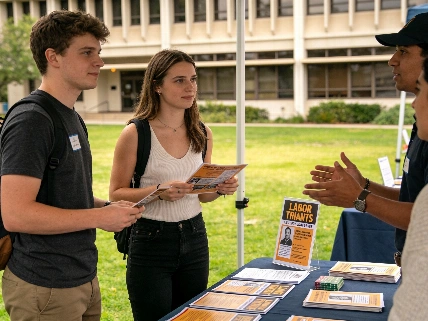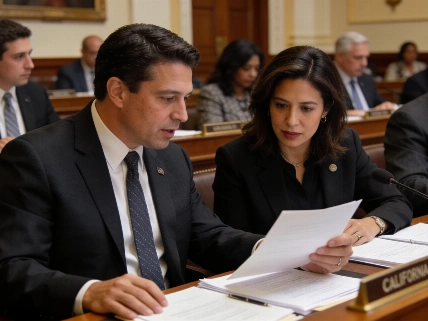
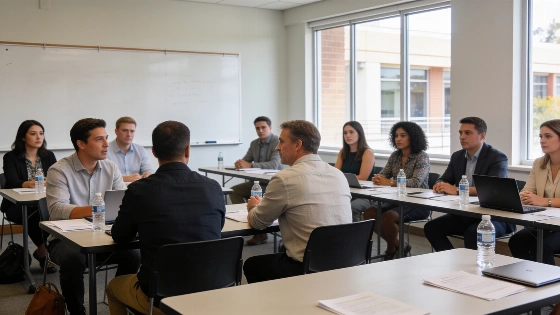
After a failed 2024 bond effort, affordable housing advocates from the Bay Area are regrouping and now focusing on a 2028 regional ballot measure that could bring in billions for new housing projects. On Monday, representatives from 34 nonprofit organizations and housing agencies met at the College of Marin in Novato to discuss funding, gauge voter sentiment, and consider backup plans if the initiative stalls.
The earlier effort, Regional Measure 4, aimed to provide $20 billion for about 70,000 apartments and homes but was pulled from the 2024 ballot due to a technical error. Independent reporting points to concerns about voter support, possible litigation, and the impact of Proposition 5 as factors in the withdrawal. Polling commissioned by the Bay Area Housing Finance Authority (BAHFA) showed support hovering near the 55% threshold needed for passage. The new proposal would again need voter approval and, if it passes, would send funds to cities and counties either directly or through grants managed by BAHFA. This authority, created by California legislation in 2019, operates through the Metropolitan Transportation Commission and the Association of Bay Area Governments. State law allows BAHFA to raise and distribute regional housing funds, focusing on affordable-housing production and preservation, tenant protections, and help for low-income and very-low-income households.
Funding challenges and local needs
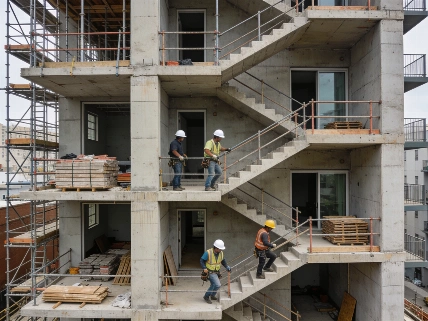
A May 2024 research announcement from the Metropolitan Transportation Commission reported that 433 affordable-housing projects across the nine-county Bay Area were in predevelopment and could add more than 40,896 homes. These projects together needed about $9.7 billion to move forward, showing a major financing gap before construction. Jenny Silva, executive director of Call Marin Home, called funding a major obstacle and said Marin County has several fully approved affordable housing projects that are stalled for lack of money. She also cited a Marin Community Foundation-funded report estimating that West Marin alone needs 1,000 units for residents earning $65,000 or less-almost triple the state requirement for all income levels in that area.
Proposition 1, a statewide measure called the Veterans and Affordable Housing Bond Act of 2026, recently passed and authorizes $11.25 billion in state general-obligation bonds, with $10 billion for housing-affordability programs and $1.25 billion for veterans' home-loan programs. The housing allocation covers rental-housing construction and rehabilitation, supportive housing, preservation, homeownership assistance, and housing for farmworkers, students, and tribal communities. The Associated Press reported that Proposition 1 received 60.79% support, or 6,123,493 votes, compared with 39.21% opposition, or 3,949,569 votes. Of the total, $7.2 billion is set aside for acquiring, building, or renovating an estimated 40,000 rental units, mainly through financing for developers and local governments. Local governments must provide matching funds to access these resources, and the funds cannot be used for tenant protections or anti-displacement programs. Jen Klose, executive director of Generation Housing, said Prop. 1's funds are limited and highly competitive, especially for smaller North Bay counties. The regional measure, if approved, could help local governments meet the matching requirements and open up more state funding. Proposition 1's funding structure is broader than a standard rental-housing bond, combining production and preservation, infrastructure, supportive housing, and homeownership assistance, but it does not close the separate predevelopment financing gap identified by the Metropolitan Transportation Commission.
Expanding the scope and next steps
At the Novato meeting, participants discussed expanding the measure to cover tenant protections, permanent supportive housing, infrastructure, and homeownership programs. They also looked at ways to speed up funding for projects that already have permits. To qualify for the 2028 ballot, the regional measure would need enough signatures and the governor's approval by October 2027. As of the latest independent reporting, the 2028 proposal is still in planning and drafting and has not yet been enacted or formally qualified for the ballot. The renewed effort reflects both the documented $9.7 billion predevelopment gap and the earlier measure's difficulty reaching the ballot. For more on BAHFA's statutory authority and the regional housing finance framework, see the California Legislative Information record.
For additional context on recent statewide housing proposals and voter decisions, see this earlier breakdown.