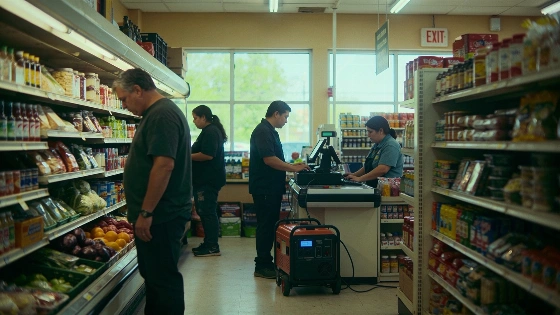
During a winter storm in Texas, 17 retail and commercial sites using ERock backup generators faced 40 grid failures. The grid stayed down for more than 127.1 hours, but these locations saw only about one minute of total downtime. One grocery store kept its doors open, offering food, water, and shelter to residents who lost electricity.
Multilocation retailers rely on automation to keep operations running across hundreds of sites. Yet, when power, refrigeration, or security systems fail in a disaster, automation alone cannot keep stores open. Extreme weather, fire, or other emergencies often reveal these gaps. The Pacific Northwest National Laboratory (PNNL) reports that the United States saw 265 weather and climate disasters topping $1 billion in damages over the last two decades, with 16 billion-dollar events in 2017 alone totaling more than $320 billion. PNNL points to building efficiency, insulation, airtight envelopes, passive ventilation, backup power, and energy storage as key factors that help buildings stay operational when the grid fails. Efficient buildings paired with backup power or energy storage systems can keep running and maintain operability under these conditions (PNNL report).
Power Failures and Cold Weather
Electrical systems built for normal conditions can break down during long cold spells. Retailers often realize their risk only after a power outage knocks out automated point-of-sale and refrigeration equipment. Backup power systems can turn a shutdown into a manageable event, making pre-installed solutions more important than how quickly the grid comes back. PNNL research shows that insulation, efficient windows, airtight construction, and passive ventilation are crucial for building resilience during extreme temperature events. These measures can keep indoor conditions tolerable and limit the impact of outages, helping automated systems keep working.
Security Challenges After Wildfires
Theft can stall wildfire recovery at damaged or partially rebuilt sites. In California, a commercial property’s rebuilding contractor faced repeated theft of materials and equipment until AEGIS Security and Investigations set up continuous monitoring. This stopped the thefts and let the project finish on time. The National Oceanic and Atmospheric Administration reported wildfires caused $81.6 billion in losses between 2017 and 2021, up sharply from $8.6 billion between 2012 and 2016. Wildfire risk now reaches areas not previously seen as fire-prone, putting more retailers in harm’s way. PNNL notes that a warmer atmosphere can make wildfire conditions worse, exposing buildings and energy systems to greater risk from extreme weather.
Hurricane and Flood Recovery
Hurricane damage grows with every day a store stays closed. Spoiled inventory, ongoing overhead, and lost customer loyalty can quickly add up. When a major hurricane cut power to a retailer’s stores, CoolSys used its national network to send teams as soon as roads reopened, saving the retailer over $200,000 in one week.
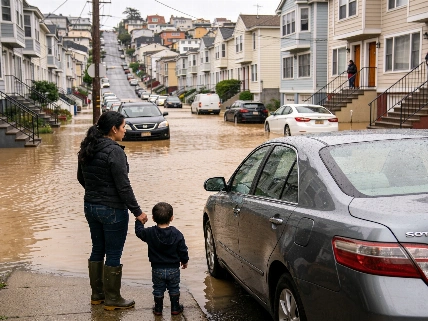
Flooding is another ongoing threat. A Miami shopping center with repeated flood exposure installed custom flood panels from Flood Risk America, keeping the center open during the project. Nationwide, flood damage to retail, office, and multi-unit residential properties is projected at over $13.5 billion in a single year. About a quarter of businesses hit by a natural disaster never reopen. Heavy rain and urban drainage failures can create flood risks even outside traditional flood zones. PNNL’s analysis looks at resilience through operational measures like occupant health, property damage, indoor conditions, energy demand, and the ability to shelter in place during an outage, expanding the business case for infrastructure investment beyond automation uptime.
Earthquake Resilience and Long-Term Investment
Earthquakes test the structural strength of buildings, often leaving advanced automation useless if the facility is damaged. After a 6.5-magnitude earthquake in 1971 forced an Anheuser-Busch brewery in Los Angeles to close, the company invested in a seismic retrofit with Optimum Seismic. When a stronger earthquake hit two decades later, the retrofitted facility stayed operational, with officials estimating the upgrade paid back over 30 times its cost in avoided losses. Seismic risk is not limited to states with major fault lines, so retrofitting is worth considering even in less obvious regions.
Retailers that bounce back quickly from disasters have one thing in common: strong infrastructure built before disaster hits. The ability to keep operating depends less on automation and more on the physical systems behind it. Federal regulations back this up. Under 17 CFR § 23.603, covered financial entities must keep written business continuity and disaster recovery plans, including backup facilities, systems, infrastructure, and geographically separate recovery resources (official regulatory text). While this rule applies directly to swap dealers and major swap participants, it sets a standard for multilocation retail, where distributed operations rely on resilient power, communications, facilities, vendors, and staff during emergencies.
Federal disaster-loan rules under 13 CFR Part 123 let eligible businesses seek physical-disaster loans for damaged property, machinery, equipment, and sometimes leased premises. These loans are usually capped at the lesser of uncompensated loss or $2 million, with a possible mitigation increase of up to 20% of verified loss for resilience measures added after a disaster (SBA disaster loan regulations). This setup supports both restoration and investment in stronger infrastructure for future events.
Federal emergency-management rules (44 CFR Part 300) focus on preparedness, mitigation, coordination, and inventories of critical facilities near hazard areas. These regulations support exercises that test response procedures and coordination among FEMA, state and local governments, and businesses, as well as inventories of critical facilities. The framework encourages testing continuity plans before a disaster and tracking corrective actions to reduce vulnerability to future hazards. For retailers, this means site-level hazard mapping, exercises with utilities and vendors, and documented corrective actions for power, refrigeration, security, communications, and access systems.
With climate and weather disasters becoming more frequent and expensive, and the number and cost of billion-dollar events rising, the resilience of retail automation depends on the strength of the physical infrastructure supporting it. Investments in building efficiency, backup power, and disaster planning are essential for business continuity and public service, especially when disasters disrupt food distribution and payment systems, as recognized by federal food-assistance rules (7 CFR § 280.1).