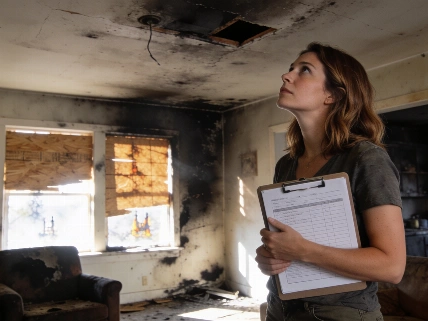
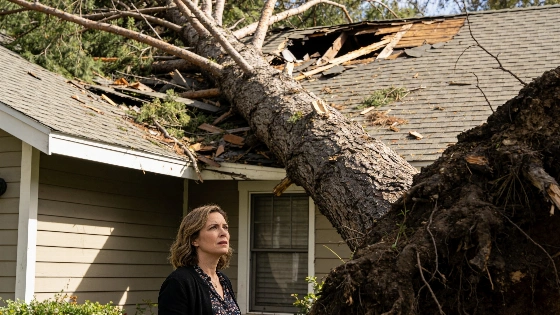
Angela Bereola’s Castro Valley home took a direct hit when a massive oak tree crashed down during a storm, setting off a drawn-out insurance fight. The tree, believed to be about 100 years old, grew on land owned by the Hayward Unified School District, not on Bereola’s lot. That detail complicated her push to recover the full cost of repairs and brought California’s legal rules for tree ownership and liability into focus. Under California Civil Code §833, a tree with its trunk entirely on one owner’s land belongs to that owner, even if roots cross property lines. But ownership alone doesn’t make the owner liable for storm damage. Liability usually depends on whether the owner knew, or should have known, the tree was dangerous and failed to act. This standard backs the school district’s stance that a storm-caused fall may count as an "act of nature" unless there’s proof of prior warnings about disease, structural problems, or hazards.
ABC 7 On Your Side reported that the storm brought heavy rain and winds up to 36 miles per hour, which brought the tree down last year. A third-party assessment put the damage to Bereola’s roof at $70,600.83, not counting extra costs for removing the tree itself.
Insurance Coverage Shortfall and Dispute
The insurance adjuster offered $19,200.86 toward the estimated repair costs, leaving Bereola with a $51,399.97 gap. Standard homeowners-insurance practice usually puts the first property-damage claim with the homeowner’s own insurer, even if the tree grew on a neighbor’s land. State Adjusting explains that the homeowner’s policy typically covers damage to the insured house, while the neighbor’s policy covers their own property and doesn’t automatically pay for the homeowner’s loss. To recover from the property owner, a separate liability case is needed, such as showing negligence or prior notice of a dangerous tree (State Adjusting).
MoneyWise quoted the district’s property and cyber claims specialist in an email: "Based on our findings and applicable code, we have determined that the tree fall was an act of nature, and no liability attaches to the Hayward Unified School District." Bereola pushed back, saying, "This isn't fair. It wasn't like we were doing something that caused the tree to fall." Months of back-and-forth with the school district’s insurance authority led nowhere for Bereola. The dispute only moved after ABC7’s consumer advocacy team stepped in, which prompted a supplemental payment from the insurer. The exact amount of this extra payment and Bereola’s final out-of-pocket costs were not disclosed in the available details. The reported $51,399.97 gap reflects the difference between the repair estimate and the initial payment, not necessarily the final uncompensated loss.
Wider Challenges for Homeowners
Bereola’s case highlights the broader problems many homeowners run into when seeking insurance payouts. Weiss Ratings reports that the U.S. national weighted-average homeowners-insurance rate jumped 10.4% in 2024, with some states seeing even sharper increases. Florida homeowners paid an average of $8,292 after an 18% hike, and premium increases in Minnesota, Colorado, Iowa, and Oklahoma ranged from 24% to 34%. Insurers have also raised deductibles and, in some high-risk areas, stopped writing new policies (Weiss Ratings). These trends mean a large repair gap can leave households exposed even when a policy is active.
Weiss Ratings also found wide variation in the share of homeowner claims closed without payment. One summary citing Weiss and the National Association of Insurance Commissioners said Florida insurers closed 46.7% of homeowners claims without payment in 2024, compared with 40.0% in 2022 (Policyholder Advocacy Group). A claim closed without payment doesn’t automatically show the insurer acted improperly, that the claim was excluded, or that a separate payment was made under another coverage.
Homeowners are urged to review their policies, document damage with photos, keep detailed notes, and save receipts for any temporary repairs to support their claims. Independent adjusters or licensed contractors can provide their own estimates, but public adjusters may charge about 15% of the total claim, according to United Policyholders. Homeowners should consider these costs before hiring outside help.
Options After a Denied Claim
If an insurance claim is denied, policyholders can check their policy for appeal steps and deadlines. Legal action is another route, especially for large disputed amounts, though attorney fees can be high. Bereola’s case shows how property damage from a neighboring lot can spark complex insurance disputes and leave homeowners with major financial exposure. Under California law, negligence and foreseeability are key factual issues in deciding liability for tree-related damage, and a clear answer would require evidence such as the tree’s inspection history, maintenance records, and expert arborist reports.
For more on the original story, see Economic Times coverage.