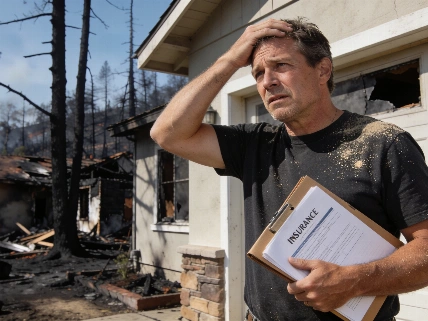
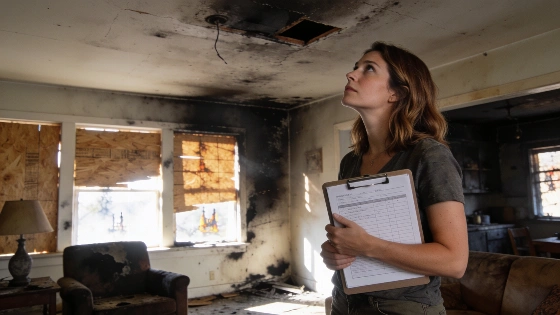
After the January 2025 Los Angeles wildfires, thousands of California homeowners are dealing with the fallout, including more than 13,000 insurance claims tied to smoke damage in homes that escaped the flames. Survivors have reported ongoing disputes over smoke contamination and slow insurance payments. State lawmakers responded by passing new legislation to boost protections for those affected. The California Department of Insurance points out that catastrophic wildfire losses can put heavy financial strain on insurers just as policyholders need them to pay claims. This was clear after the 2018 Camp Fire, which led to the collapse of one California insurance company. That experience has shaped the state’s focus on insurer solvency and claims-paying capacity, according to Insurance Commissioner Ricardo Lara (California Department of Insurance).
On September 15, Governor Gavin Newsom signed four bills that set new standards for smoke damage testing and expanded mortgage relief for homeowners hit by disasters. Less than two weeks later, Senate Bill 876—the Disaster Recovery Reform Act—was signed to improve how insurance companies process claims after major disasters. Lawmakers acted after residents affected by the Eaton and Palisades fires faced inconsistent assessments and rising rebuilding costs. The California Legislative Information portal tracks bill histories and legislative actions (California Legislative Information).
Smoke damage and insurance reforms
Assembly Bills 1642 and 1795 set new rules for testing and cleaning up smoke contamination in homes. The governor’s office says the legislation targets inconsistencies in how insurers decide if homes are safe for residents to return. Emily Rogan, senior program officer at United Policyholders, said that even homes next to each other can have different levels of smoke contamination, which complicates claims. "Smoke damage or standing homes can be almost trickier than total losses for quite a few reasons. In terms of the insurance claim process, how it should work is that every home is evaluated on its own. You want to make sure that every home is tested and determined if it’s safe and remediated," Rogan said.
For insurance companies, reliable smoke-damage assessments remain a key issue. Janet Ruiz, senior director of strategic communication at the Insurance Information Institute, said, "We want people to get the testing done and know that their homes are safe to go back to. But it has to be science-based. That’s really our main concern: to make sure that the people who are doing the testing are qualified and giving people the right information about their home so they can get back to them as soon as possible." The California Department of Insurance stresses the need for insurers to be financially ready to pay covered claims quickly and fully after major disasters (Department of Insurance announcement).
Financial relief and rebuilding challenges
The Disaster Recovery Reform Act raises standards for insurers handling disaster-related claims, with some rules starting in 2027 and others set for later. The law aims to improve accountability and cut delays in insurance payments. Rogan pointed out that insurance delays can make it harder for survivors to find temporary housing, since policies often set a fixed dollar amount for rent while homes are uninhabitable due to smoke damage.
Underinsurance continues to be a major problem. Rogan said that when coverage doesn’t match rebuilding costs, survivors may need loans, dip into savings, or rebuild smaller homes. Ruiz added, "There’s usually a demand surge on contractors and building supplies. You can imagine how hard it is to find contractors and supplies when that many homes are lost." The new law requires insurers to offer extended replacement cost coverage, aiming to keep homeowners from discovering too late that their insurance falls short. The Department of Insurance has put in place a long-term solvency regulation to require insurers to share more about how they plan for future risks, giving regulators more oversight of their financial health and claims-paying ability over time (insurance solvency regulation).
Expanded mortgage forbearance and infrastructure needs
Along with insurance reforms, Assembly Bills 1842 and 1847 expand mortgage forbearance protections for disaster survivors who qualify. For those affected by the 2025 Los Angeles wildfires, the mortgage relief period now runs 24 months instead of 12. Forbearance lets homeowners postpone mortgage payments while displaced, but the payments are not forgiven. Rogan noted that mortgage obligations add pressure, especially when homeowners can’t live in their properties but still have to pay.
Restoring essential infrastructure is another key part of recovery. Nicholas Hinzo, acting captain with the Redwood City Fire Department, said rebuilding goes beyond homes and includes the infrastructure that supports neighborhoods. "There are many pieces of infrastructure that not only make a city work, but also have your neighborhood look like your neighborhood. It takes time, and there are plenty of procedures that have to be done before a house is rebuilt and power and water are turned back on, so the infrastructure is a big part," Hinzo said. In 2026, the Department of Insurance launched the California Green Ribbon Commission on Nature, Biodiversity and Insurance, which studies the links among ecosystem health, risk reduction, insurance markets, and economic security (Green Ribbon Commission).
Limitations and future protections
While the new laws address several issues raised by wildfire survivors, many protections will not apply retroactively to those already working through recovery. Rogan called the legislation "a really great step in the right direction," but pointed out that most bills are not retroactive and will take effect at the start of the year or later. The changes are designed to help future disaster survivors avoid some of the problems faced by those recovering from the 2025 Los Angeles wildfires. The Department of Insurance continues to focus on keeping insurers able to pay covered claims after future disasters, supporting the stability of California’s insurance market.