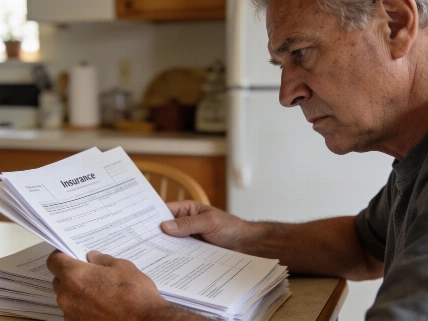

Southern California Edison’s Wildfire Recovery Compensation Program has now received more than 5,550 claims from individuals, families, and businesses affected by the Eaton Fire, according to the utility’s latest data. These claims cover nearly 17,000 individuals, trusts, and legal entities impacted by the disaster. The program, which provides an alternative to litigation for wildfire compensation, has seen participation climb as the November 30, 2026, submission deadline nears. October 2026 marked the program’s busiest month for claims, showing increased community involvement as the cutoff approaches. Attorneys or authorized representatives have filed about 41% of all claims, so a significant share of claimants are turning to professional help. Fidelity Investments noted that claims submitted by the November 30 deadline will still be eligible for review and processing after the cutoff, since the deadline is for submissions, not for ending all claims administration.
Claims activity has picked up in recent months, with October setting the highest monthly total so far this year. Over 41% of claims have been filed with attorney or representative assistance, showing a shift as more claimants seek legal support to navigate the process. For those represented at submission, the program adds 20% of the net damages portion to help cover legal expenses.
Compensation Offers and Payments
By October 30, 2026, the program had made more than 3,200 offers to over 8,000 claimants, totaling about $1.1 billion. Nearly 80% of these offers have been accepted, and only about 2% declined. Payments have already reached more than 4,450 claimants, with over $625 million disbursed and more payments underway. On average, offers are delivered within 36 days after a substantially complete claim is filed, and payments usually follow within 30 days once all settlement conditions are met. Some claimants have received payment in as little as two to three weeks. These figures, outlined in Edison International’s third-quarter 2026 earnings materials, describe offers and claimant participation but do not represent a final determination of the company’s total Eaton Fire liability or the amount ultimately recoverable from insurers, regulators, or the Wildfire Fund. The Edison International Q3 2026 earnings call confirmed the November 30, 2026, deadline for new claims submissions.
Program Details and Community Guidance
The Wildfire Recovery Compensation Program aims to provide compensation in line with settlement values from similar past wildfire lawsuits, but through a more efficient process. Pedro J. Pizarro, president and CEO of Edison International, said it is encouraging to see more families and businesses using the program as they recover and move forward. He pointed out that eligible community members still have time to submit claims before the November 30, 2026, deadline and urged them to review available compensation options. SCE program officials have repeated that there is still time to submit a claim before the deadline, and that claims filed by November 30 will continue to be reviewed and processed even if validation or offer preparation is not finished by that date.
Program officials have stated that waiting for litigation is unlikely to bring faster compensation. Only eight households have been selected by the court for the initial trial, and the litigation process is expected to take time. Southern California Edison’s legal exposure remains contested, as a California Superior Court judge recently denied Edison International’s request to resolve key liability issues without a jury in litigation from the January 2025 Eaton Fire. The ruling lets property owners’ claims proceed under California’s inverse-condemnation framework, which can impose liability on a utility when its equipment is found to have caused a fire, even without a standard negligence finding. The court dispute involves billions of dollars in claimed property and related losses, while Edison continues to promote its voluntary compensation program as an alternative to drawn-out litigation. A jury trial is set for late January 2027, as reported by Claims Journal.
The Eaton Fire, which started near Pasadena in January 2025, has been called the most destructive wildfire in Los Angeles area history, with 19 fatalities, about 14,000 acres burned, and more than 9,000 homes and businesses destroyed or damaged. The Los Angeles County Fire Department’s investigation found that electrical arcing happened on an out-of-service transmission tower on a dry hillside, and plaintiffs claim that a January 7 power surge on a nearby active line created a magnetic field that briefly reenergized the dormant cable. Southern California Edison has acknowledged that county reports found its equipment caused the ignition, but the company continues to review those findings and has drawn a line between ignition and decisions about legal responsibility, prudence, and recoverability of costs. The California Public Utilities Commission’s Safety and Enforcement Division and the Los Angeles County District Attorney’s Office are investigating separate regulatory or criminal questions, with SCE stating in its third-quarter 2026 materials that it believes there is no basis for a finding of felony liability or conscious or willful disregard of the rights and safety of others.
Support and Information for Claimants
Southern California Edison is holding in-person and virtual sessions to help community members learn about the program, ask questions, and get help starting a claim. Detailed guidance is available in English and Spanish on the Wildfire Recovery Compensation Program web page, and one-on-one support is offered in multiple languages by phone or in person. The program’s phone line is 888-912-8528.
The compensation program’s voluntary structure creates a significant choice for claimants because accepting an offer can affect or end related claims against SCE. Legal guidance published for Eaton Fire claimants states that acceptance generally releases claims against Edison, making the offer terms and release provisions important to homeowners, businesses, insurers, and other affected parties. The program is set up to provide a faster route than litigation, but represented claimants should consider the effect of the release and the extra legal costs tied to seeking compensation. This parallel-track environment means administrative settlements are moving forward while court proceedings continue toward a possible 2027 jury trial.
Southern California Edison, a subsidiary of Edison International, is one of the nation’s largest electric utilities, serving a population of about 15 million.