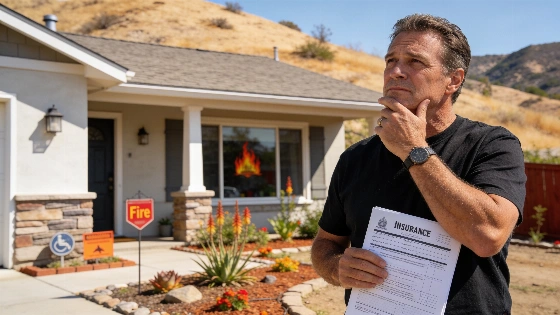
Private insurers have been pulling back from California’s home insurance market, leaving many homeowners scrambling for coverage as wildfire losses mount. Since September 2022, the number of policies in the California FAIR Plan—the state’s insurer of last resort—has jumped by more than 157%. The share of single-family households enrolled climbed from about 2% to roughly 5%, reaching nearly 700,000 dwelling and commercial policies by October 2026. This trend tracks the rising cost of wildfire disasters and the difficulty of setting rates under California’s regulatory rules. Against this backdrop, Democratic insurance commissioner candidate Jane Kim is pushing for a statewide public nonprofit disaster insurance program that would make wildfire coverage mandatory for all existing homes. Kim’s "public Disaster Insurance for All program" would mark a major departure from the current reliance on private insurers and the FAIR Plan, and would need legislative approval before it could launch. CalMatters and The New Republic have covered the proposal’s reach and possible effects.
Kim’s plan would collect premiums from homeowners statewide, replacing the current setup where private companies take in payments and distribute profits to executives and shareholders. Under her approach, money not used for claims would go toward wildfire risk reduction, tying insurance funding to mitigation and community resilience. The program would guarantee coverage to "fully rebuild the typical California home," though Kim hasn’t named a dollar cap for this limit. Homeowners with higher-value properties could buy extra coverage above the standard amount. The proposal is framed as a mandatory public nonprofit for existing homes, with premiums pooled across the state instead of being kept by private insurers. Unused funds would be invested in fireproofing and floodproofing communities, aiming to keep coverage affordable by cutting future losses.
Financial modeling for a similar statewide disaster-insurance program, using a California Earthquake Authority report, estimated that about $25 billion in capital would be needed to withstand a severe wildfire year. Annual reinsurance costs were pegged at $2 billion to $3 billion, or about $150 to $230 per policy. Without reinsurance, a once-in-a-century wildfire could require an extra charge of $1,900 to $2,000 per policy, spread over several years. The proposed funding model would use a two-part premium: a risk-based wildfire charge and a small, capped contribution from every California home to cover extreme-loss years. These numbers show the core challenge of pooling risk in a state where catastrophic wildfire losses can reach tens of billions of dollars.
Expert perspectives and market challenges
Kim’s campaign cites public insurance models in New Zealand, France, and Spain as inspiration, but experts point out that no single example matches the size and structure of her proposal. Zac Taylor, a professor at Delft University of Technology, called the ambition significant and stressed that the details of implementation matter most, noting that parts of this agenda have been tried in different places, but never combined in one program at California’s scale.
Carolyn Kousky, founder of Insurance for Good and a contributing economist at the Environmental Defense Fund, flagged concerns about the lack of diversification in a statewide wildfire insurance pool. She explained that insurers with broader risk portfolios can offer lower-cost coverage, while a program focused on one peril or region may face higher capital and reinsurance needs. A pool centered mainly on wildfire and one state could need more capital than a carrier with a wider portfolio. Kim argues that the public program could tap reinsurance and bond markets for financial backing and believes centralizing risk would help public and private entities coordinate better. The program would rely on premium collection, investment income, reinsurance, and access to capital markets to handle losses that can reach tens of billions of dollars.
California’s current reform effort, led by Insurance Commissioner Ricardo Lara, includes the Sustainable Insurance Strategy, which lets insurers use catastrophe models and the net cost of reinsurance when setting rates. In return, insurers must agree to write at least 85% of their statewide market share in wildfire-distressed areas. This regulatory deal aims to bring private insurers back and reduce reliance on the FAIR Plan, but could mean higher rates for homeowners in the short term. Kim’s proposal would take a different path by shifting more catastrophic risk from private carriers to a state-backed nonprofit.
Michael Wara, a research scholar at Stanford University’s Woods Institute for the Environment, questioned whether the proposal could clear the Legislature and whether it’s the right move as current Insurance Commissioner Ricardo Lara works to lure private insurers back to the state. Philip Mulder, assistant professor of risk and insurance at the University of Wisconsin Madison, said a version of Kim’s plan could work but called for more detail on how costs would be split among homeowners, stressing the need to price risk accurately and pay claims reliably.
Political debate and next steps
Kim’s main opponent, Ben Allen, a term-limited Democratic state senator, has strongly criticized the proposal, calling it "a totally unprecedented, unmoored, unresearched proposal that really doesn’t have any grounding in the actual realities of the market and the system." Kim acknowledges the novelty and legislative hurdles but insists the current system is failing many homeowners. She argues that a public nonprofit could keep premium resources in California, invest in fireproofing and floodproofing, and improve long-term affordability by reducing losses. The immediate policy debate focuses on financing, reinsurance, risk diversification, the coverage cap, legislative authority, and whether public pooling would expand access without creating an undercapitalized state obligation.
As private insurers keep limiting wildfire coverage and more homeowners turn to the California FAIR Plan—which raised rates by an average of 29.1% in October 2026—the debate over disaster insurance in the state remains unsettled. Insured losses from the Palisades and Eaton fires reached $37.5 billion, while insurers held nearly $1.27 trillion in reserves. National insurers’ underwriting income rose from $24.3 billion in 2024 to $68.7 billion in 2025, showing the benefits of geographic diversification outside California. These numbers highlight what’s at stake for California homeowners and the scale of the challenge for any new statewide insurance model.