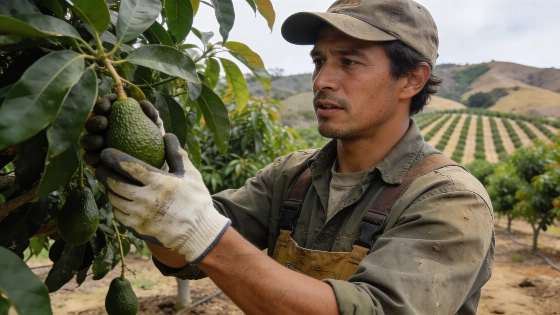
California's avocado industry has stepped up calls for new trade rules, raising alarms about criminal cartels and illegal deforestation in Mexico that they say tilt the playing field in the U.S. market. The California Avocado Commission pushed back against a recent Fortune magazine opinion piece that supported unrestricted Mexican avocado imports, arguing the column ignores cartel influence and unlawful farming practices affecting growers on both sides of the border.
Ken Melban, President of the California Avocado Commission, challenged the Mexican Hass Avocado Importers Association's statements about lower prices from free-market forces, saying these claims don't match what growers experience. Melban said, "in the Mexican avocado industry where cartels control orchards, seize land, profit from illegal deforestation, and dictate whether fruit moves to market, it’s the criminal drug cartels, not the importers, that are determining what enters the supply chain and ultimately reaches American consumers." He continued, "That’s not a free market. It’s a market distorted by drug cartels, which forces California growers to compete against cartels that don’t operate within the law."
Documented Evidence and Congressional Response
The Commission cites U.S. Treasury Department findings that detail cartel extortion, land grabs, and illegal farming in Mexico. In August 2026, U.S. avocado-inspection operations in Michoacán stopped for three days after a security alert tied to violence from drug-trafficking groups forced USDA inspectors to leave. This pause halted export-certification work, directly impacting the legal flow of Mexican avocados into the United States and exposing the fragility of U.S.-Mexico agricultural supply chains. After the incident, Mexican President Claudia Sheinbaum’s administration sent in more security, but growers said the core criminal threat persisted, according to El País English.
Groups like Los Viagras, Cárteles Unidos, La Nueva Familia Michoacana, and the Jalisco New Generation Cartel have been named as active in Michoacán, with extortion targeting major agricultural exports, including avocados. In July 2026, the U.S. government labeled Los Viagras and the Juárez Cartel as foreign terrorist organizations, citing their roles in extortion and meddling in avocado exports. This designation appeared in the Federal Register, and Los Viagras leader Nicolás Sierra Santana was indicted in the District of Columbia, with a $5 million reward posted for information leading to his arrest, as reported by The Butler Eagle.
Illegal deforestation remains a pressing issue. Climate Rights International found U.S.-export-certified orchards with illegally cleared land in 49 of 56 avocado-exporting municipalities in Michoacán and Jalisco. Producers who clear forests without permits can expand output while sidestepping land-use rules and environmental costs that legitimate growers must pay. The Commission says these artificially lowered costs don't reflect real efficiency or fair competition.
Seven California members of Congress raised these concerns in an October 5 letter to U.S. Trade Representative Jamieson Greer, warning that "American avocado growers cannot compete in a market shaped by criminal organizations that profit regardless of the price paid to legitimate producers." The lawmakers urged enforceable limits on Mexican avocado import surges during the USMCA negotiations.
Market Impact and Proposed Trade Measures
Mexican avocado shipments to the U.S. jumped by about 35% in the first four months of 2026, putting more strain on California's nearly 3,000 growers. In Michoacán, Mexican producers have faced security threats and low farm prices, with export avocados reportedly paid at around 20 Mexican pesos per kilogram, while fruit sold domestically fetched only 8 or 9 pesos per kilogram—amounts growers said fell below production costs. Producers have blocked roads and demanded higher pay, pointing to extortion, poor security, and limited direct government help as ongoing problems, according to Diario de Tabasco.
The California Avocado Commission is now pushing for a seasonal tariff-rate quota under the USMCA review. This would aim to curb disruptive import surges while keeping the U.S. market open to Mexican avocados. More details about tariff-rate quotas can be found at californiaavocado.com/trq. The Commission and supporting lawmakers argue that without enforceable trade rules, American growers will keep facing unfair competition shaped by criminal activity and environmental violations in the Mexican supply chain.
For more background on the debate over Mexican avocado imports, see this coverage.