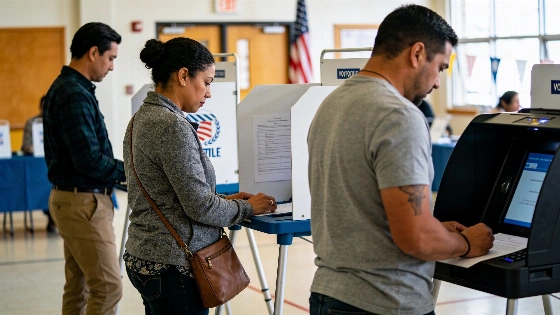
California's 2020 general election set the direction for the state's political scene, with Democrats keeping their two-thirds supermajorities in both the Assembly and Senate. The ballot measures drew the sharpest lines, as voters backed business interests on several major propositions and turned down a group of progressive proposals.
In the Senate, Democrats grew their majority by winning back two seats that had been in the hands of Orange County-area Republicans. Josh Newman (D) returned to the Senate after defeating Ling Ling Chang (R) in District 29, reversing the outcome of his 2018 recall. Dave Min (D) ousted John Moorlach (R) in District 37. The only Republican pickup came in Assembly District 38, where a split Democratic primary led to a race between two Republicans, with Suzette Valladares (R) taking the seat.
Legislative balance and seat changes
Before the election, the Assembly counted 60 Democrats, 18 Republicans, and 2 other or vacant seats. After the vote, Democrats held 60 seats, Republicans rose to 19, and one seat stayed other or vacant. In the Senate, Democrats moved from 29 to 31 seats, while Republicans dropped from 11 to 9. No chamber switched party control. California's election results come from county-reported totals, with all 58 counties handling the canvass and submitting certified returns before the state certifies the results. The Secretary of State's Office compiles these numbers but does not process or count ballots itself. The official statewide results for the 2020 general election were certified 38 days after Election Day, following the legal rule that counties must submit their final official results within 30 days. This certification schedule explains why early election-night numbers stayed unofficial for weeks, as detailed by the California Secretary of State and reported by KSBW.
Ballot measures and voter decisions
Voters weighed twelve statewide propositions in November. Five passed, including Proposition 22, which let app-based drivers remain independent contractors after a record campaign spend by companies. Proposition 17 restored voting rights to people on parole, Proposition 19 allowed certain homeowners to transfer their property tax base and limited tax breaks on inherited property, Proposition 24 expanded consumer privacy protections, and Proposition 14 approved new funding for stem cell research.
The 2020 ballot-measure campaign was one of the most expensive in California history, with total contributions to ballot-measure committees reaching about $763.7 million, according to Ballotpedia. This surge in spending showed the fierce competition among corporate, labor, tax, privacy, criminal-justice, and biotechnology interests over statewide policy. Proposition 22 played a major role in this spending environment. The official voter-information system from the California Secretary of State publishes proposition analyses and points voters to the Fair Political Practices Commission for committee-contributor details. Voters can check the top contributors to ballot measure campaigns at fppc.ca.gov/transparency/top-contributors.html.
Seven measures failed. These included Proposition 15, which would have taxed commercial property at market value; Proposition 16, which aimed to repeal the state's affirmative-action ban; Proposition 21, which sought to expand rent control; Proposition 18, which would have let some 17-year-olds vote in primaries; Proposition 20, which proposed tougher sentencing laws; Proposition 23, which would have set new requirements on dialysis clinics; and Proposition 25, which would have replaced cash bail with risk assessments. By rejecting Proposition 25, voters overturned a law passed by the Legislature to end cash bail.
March primary and earlier ballot measure
Earlier in the year, California voters turned down Proposition 13 in the March primary, which would have authorized $15 billion in bonds for school and university facilities. The measure failed with 46.99% support.
For official proposition analyses and legislative histories, the California Secretary of State's Official Voter Information Guide and the California Legislative Information database offer comprehensive resources for voters and researchers.