Bay Area residents are being told to prepare for major flooding and storm damage as meteorologists warn of a potentially record-breaking El Niño this winter. Strong winds and heavy rainfall could push local infrastructure and insurance coverage to their limits. The National Oceanic and Atmospheric Administration (NOAA) reports that strong El Niño conditions have already driven record coastal water levels along California's coast, flooding roads, inundating homes and businesses, and disrupting daily life in low-lying communities. NOAA links these hazards to El Niño-driven ocean conditions, astronomical tides, and other coastal water-level factors, not just rainfall. The agency also warned that more Kelvin waves could keep water levels high through fall and winter, stating that "these record water levels may not be the end of the story for California's coastal communities." NOAA Ocean Service.
Insurance readiness stands out as a top concern for homeowners. Many standard homeowners insurance policies exclude flood coverage, leaving properties exposed if water damage occurs. According to reporting by 7 On Your Side's Stephanie Sierra, new flood insurance policies can take up to 30 days to become active, so early action is critical for those currently without protection. NOAA has not issued new insurance mandates or regulatory orders specific to this El Niño threat, but continues to provide advisory guidance and real-time monitoring tools for coastal inundation and high-tide risk.
Key steps for property protection
Homeowners should review their current insurance policies, focusing on what is covered and what is excluded. Flood insurance usually requires a separate policy, which can be arranged through an insurance agent or by consulting FEMA for available options.
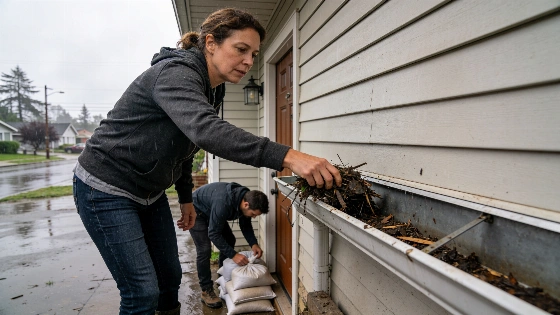
Physical preparation matters too. Clearing gutters and drainage systems of debris helps water flow away from the property, reducing the risk of leaks and water intrusion. A professional roof inspection may reveal missing or lifted shingles that could otherwise let rain into the home during a storm.
NOAA's November 4, 2026, coastal assessment identified November 22-27 and December 22-26, 2026, as periods when above-normal high tides-coinciding with perigean spring tides-are expected to increase California's coastal-flooding risk. These dates match times when the Moon is full and closest to Earth, amplifying tidal effects. NOAA cautioned that flooding could also occur outside those windows if weather or El Niño effects intensify, and directed communities to its Monthly High Tide Flooding Outlook and Coastal Inundation Dashboard for up-to-date information NOAA high tide outlook.
NOAA's seasonal ecosystem assessment, updated November 5, 2026, described a very strong El Niño developing in the equatorial Pacific, with forecasts showing much warmer than average sea surface and bottom temperatures along the U.S. West Coast and Gulf of Alaska through at least spring 2027 NOAA Integrated Ecosystem Assessment. These oceanographic changes can further alter coastal water levels and seasonal storm conditions. The new California El Niño Tracking Dashboard, launched by NOAA, uses daily data from shore stations, buoys, radar, and gliders to monitor these developments, with especially elevated indicator readings in Southern California reflecting the onset of the strong El Niño event.
Some local governments, including San Francisco and Oakland, have recently provided free sandbags at pop-up events to help residents guard against flooding. Checking with city services for similar resources can offer additional protection.
Documentation and claims
Before severe weather arrives, homeowners should document the current condition of their property by taking photos and videos of areas most at risk. This evidence can be crucial if a claim is later disputed, especially since many insurance policies exclude damage caused by earth movement. Having clear before-and-after records may help support a claim for coverage.
NOAA's National Weather Service winter outlook projects wetter-than-average conditions for the southwestern United States during the 2026-27 winter, warning that increased storm activity and excessive runoff could further raise already elevated coastal water levels. This creates a distinct flood pathway in which rainfall-driven inland drainage and runoff add pressure to coastal and estuarine systems already affected by tides and ocean anomalies. Residents and local authorities are advised to rely on current National Weather Service coastal-flood forecasts, advisories, and warnings as conditions evolve.
For those seeking further assistance, 7 On Your Side offers a consumer hotline for Bay Area residents dealing with consumer-related issues, though it does not handle business disputes, family law, criminal matters, landlord/tenant conflicts, labor issues, or medical cases. For more tips on preparing for El Niño, see our previous coverage.