
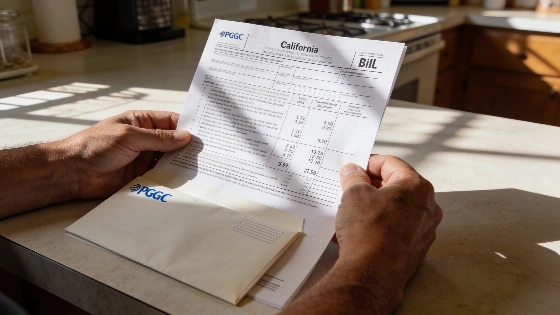
California advocacy groups have pushed back against a proposed $456 million interim rate hike for Pacific Gas & Electric (PG&E), saying the utility should not collect more from customers while it considers postponing $2 billion in infrastructure projects. Consumer Watchdog and Every Fire Survivor Network have asked California Public Utilities Commissioner Matthew Baker to withdraw his support for the increase, questioning PG&E's financial priorities and its legal responsibilities to provide service. The figures of $456 million in requested interim revenue, $2 billion in potentially deferred infrastructure spending, and possible service delays affecting 25,000 customers are reported claims and have not been matched to an official California Public Utilities Commission (CPUC) filing or government data source.
In a joint letter, the organizations pressed Commissioner Baker to send the proposal back to the Administrative Law Judge for more review. Alexandra Nagy, organizing director of Consumer Watchdog, said PG&E is shifting its approach to infrastructure spending while expecting regulators to approve hundreds of millions more in ratepayer money. She called for the rate hike to be paused until PG&E can justify the need for extra funds and clarify why it is considering delaying service to 25,000 customers. The roles of Alexandra Nagy and Joy Chen, executive director of Every Fire Survivor Network, are described in the advocacy letter but have not been independently verified through official organizational pages or filings.
Concerns Over Utility Spending and Service Obligations
The proposed decision from Commissioner Baker was reportedly released on September 23, weeks after PG&E announced plans to cut spending. The proposal does not address how these reductions fit with the request for increased revenue. On October 23, the CPUC's Public Advocates Office filed a motion warning that PG&E's lower capital spending could make its projected 2027 revenue requirement excessive and inconsistent with the evidence on record. The reference to the Public Advocates Office motion and its docket number has not been independently confirmed.
Advocates also pointed out that PG&E's threatened delays in service connections may violate its legal duty to serve customers. Under current CPUC decisions, the utility must prioritize funding for necessary service connections, and its holding company may be required to provide capital to meet these responsibilities. The specific California statute, CPUC general order, or commission decision governing these obligations has not been identified in the available regulatory context. Legal issues regarding the duty to serve and intercompany financing rules require citation to exact authorities and distinctions between mandatory service obligations, prudence standards, and commission-approved investment plans.
Joy Chen, executive director of Every Fire Survivor's Network, said PG&E wants $456 million more from customers while threatening to cut $2 billion in infrastructure investments. Before asking Californians for more money, PG&E needs to explain what it will deliver with the funds. She added that the CPUC must require proof and hold the utility accountable for its service obligations. The exact wording of these statements has not been independently authenticated.
Scrutiny of Interim Rate Increases
Consumer Watchdog and Every Fire Survivor Network criticized the CPUC's practice of approving interim rate hikes before fully examining utility costs. Nagy argued that this approach lets utilities collect large sums from ratepayers before showing need, creating expectations among investors that costs will be covered regardless of justification. The groups pointed to PG&E's shifting spending plans as a reason to reconsider this practice. The relevant revenue-requirement period, rate-base assumptions, customer-class allocation, and proposed cents-per-kilowatt-hour impact for the interim rate increase have not been identified in official filings.
PG&E has outlined plans to spend $11.4 billion on infrastructure in 2027 but has not explained why $2 billion in projects must be deferred or whether its holding company could provide the necessary funding. The advocacy groups are urging further examination of PG&E's revised spending plans and its duty to serve before any interim rate increase is approved. The status of the proposed rate increase, including whether it was approved, modified, rejected, withdrawn, or superseded, has not been established. No verified implementation date, customer-bill impact, commission vote, rehearing request, or final decision has been identified. For more on the broader context of utility spending and wildfire risk in California, see the original report and a recent report on local resistance to a proposed camp in Goleta Valley.