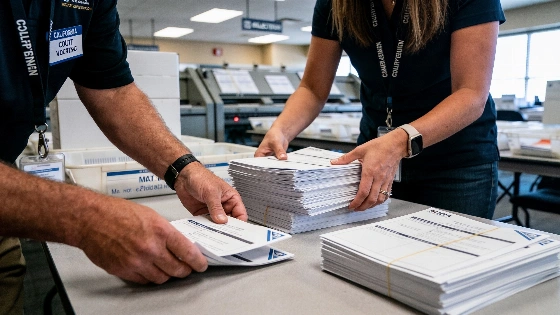
Federal officials have ended their push to stop the counting of more than 20,000 mail-in ballots in California that were alleged to have been submitted by registered voters likely to be non-US citizens. The Justice Department formally withdrew its lawsuit on Friday, days after the midterm elections wrapped up with Democrats winning all statewide races and most congressional contests across California.
The legal action started on October 15, 2026, when the U.S. Department of Justice filed suit in federal court in Los Angeles against California state election officials and Dean Logan, the Los Angeles County registrar-recorder and county clerk. The DOJ claimed California was blocking enforcement of a 1996 federal law criminalizing noncitizen voting in federal elections and tried to stop the tabulation of ballots from more than 20,000 registered voters whom federal officials called "likely" non-U.S. citizens. The complaint asked that these ballots be set aside and not counted until each voter's citizenship status could be determined, relying on a federal government list that flagged these individuals. The case was filed just weeks before the November 3 midterm election, leaving little time for judicial review, as reported by Reuters and CNBC.
On October 28, 2026, U.S. District Judge David Carter denied the DOJ's request for a temporary restraining order that would have required California to segregate the challenged ballots. Judge Carter pointed to major uncertainty in the federal government's identification process, describing it as "rife with uncertainty and errors," and warned that the requested intervention could affect legitimate voters while election procedures were already underway. The court noted that the government's list identified about 20,000 people as likely noncitizens, but did not represent a final decision that each person was ineligible to vote. This ruling kept California's existing ballot-processing procedures in place while the case continued.
After the district court's decision, a divided federal appeals court in late October declined to order California election officials to set aside the ballots identified by the DOJ. The government then sought emergency intervention from the Supreme Court on November 2, just one day before the election. The Supreme Court issued an unsigned order denying the DOJ's emergency application to require California to separate mail ballots associated with the alleged noncitizens, letting the state continue counting ballots under its existing procedures. The Court's action did not make a final determination on the eligibility of the voters on the federal list, but rejected the emergency intervention at that stage.
Judicial skepticism and case dismissal
US District Judge David Carter had previously raised doubts about the Justice Department's case, warning that the requested intervention could disenfranchise legitimate voters and disrupt established election procedures while voting was already underway. Carter cited the vagueness of the government's descriptions of its procedures and the unreliability of similar claims in other states. The dispute also highlighted the practical difficulty of isolating particular ballots after election officials have accepted and combined them with other ballots, raising concerns about disenfranchisement, ballot secrecy, and the feasibility of identifying individual ballots after processing.
In its notice of voluntary dismissal filed on November 6, 2026, the department acknowledged that "the relief the United States sought is no longer available" now that the votes have been counted or incorporated into the election process. The dismissal ended the immediate effort to halt or isolate the approximately 20,000 ballots, although the DOJ did not indicate whether separate investigations or future litigation might follow. The distinction between a flagged voter, a challenged ballot, and a legally proven unlawful vote remained central to the case, as the federal list represented people the administration alleged may be noncitizens, rather than voters conclusively found to have violated federal law, according to CBS News.
This development follows a period of heightened scrutiny over California's election processes, as highlighted in an earlier breakdown of the state's post-election challenges. The Supreme Court's refusal to intervene left California's ballot-counting procedures unchanged on the eve of Election Day, and the DOJ's subsequent voluntary dismissal reflected the practical consequence of allowing the ballots to proceed through counting and become commingled with other ballots.