
San Francisco’s ongoing disputes over housing and transportation policy show up clearly in the records of congressional candidates Scott Wiener and Connie Chan. Their different strategies have shaped city debates and influenced decisions that affect residents, businesses, and commuters.
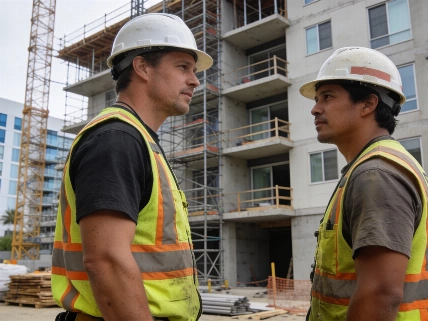
Wiener, a longtime supporter of urban development, has consistently pushed for more housing construction and expanded transit, along with streamlined permitting. His legislative work includes bills like SB 827 and SB 79, which aimed to overhaul zoning and increase housing density near public transit. SB 79, signed into law on October 10, 2025, and codified in Government Code sections 65912.155–65912.162, set minimum housing heights, densities, and floor-area ratios near qualifying rail and bus-rapid-transit stops in designated "urban transit counties" such as San Francisco, Alameda, San Mateo, and Santa Clara. The law began applying to cities on July 1, 2026, and defines an "urban transit county" as one with more than 15 passenger-rail stations. Local alternative plans or compliant ordinances can affect how it is put into practice. These measures brought Wiener national attention and support from urbanist groups, but also stirred controversy over the pace and nature of change in established neighborhoods. Official legislative information provides further details on SB 79.
Transit projects and local resistance
Chan’s approach has often focused on the concerns of existing residents and small businesses. In 2023, she urged the city to delay a rapid bus lane project on Geary Boulevard after merchants raised alarms about parking loss. The Geary bus-lane project, implemented in August 2023, covered 32 blocks between Stanyan Street and 34th Avenue and, in its reduced form, removed 31 parking spaces—less than half of the 70 spaces initially proposed for removal. While transit advocates argued the changes would improve service, Chan sided with business owners who feared negative impacts. A subsequent San Francisco Municipal Transportation Agency report found bus travel times improved by 6% to 11%, with the median parking search time reported as less than 1 minute. This indicated limited parking impact despite merchants’ concerns.
Her skepticism extended to other projects, such as opposing the full pedestrianization of John F. Kennedy Drive and resisting Proposition K, which converted part of the Great Highway into a park. The 2024 Proposition K, which should not be confused with other measures of the same letter, permanently closed the Upper Great Highway between Lincoln Way and Sloat Boulevard to private vehicles and converted the roadway into public recreational space. This followed a three-year period of weekend-only pedestrianization. Proposition K passed with approximately 54.7% of the vote, and five months after the vote, the former roadway reopened as Sunset Dunes, a two-mile public recreational space along Ocean Beach. CBS News San Francisco. The future of the corridor remains contested, as San Francisco voters were scheduled to revisit the issue in a later election through Proposition G, marking the third public decision on the Upper Great Highway in four years San Francisco Chronicle.
Chan’s support for transit funding has depended on the tax structure; she backed a ridehailing tax for Muni but opposed sales tax measures she described as regressive, including Measure RR for Caltrain and a temporary bridge toll hike for BART and other agencies. She criticized these taxes as burdensome for working people and small businesses, calling instead for state and federal funding solutions.
Wiener, meanwhile, has been credited by transit advocates for securing emergency state loans for Muni and BART in 2025, and for negotiating a regional transit sales tax measure to stabilize budgets. While Chan agreed to support the regional measure, she did so reluctantly, objecting to its regressive nature and faulting Wiener for not achieving a more progressive tax structure. Wiener defended the measure as the product of years of negotiation and compromise, arguing that alternative tax options would have failed or been vetoed.
Housing policy and zoning battles
Wiener’s housing agenda has centered on increasing supply, arguing that more construction—both market-rate and affordable—will help address San Francisco’s affordability crisis. He has championed upzoning and streamlined permitting, along with state mandates to force localities to allow denser development near transit. Supporters of earlier reforms such as SB 35 have credited those measures with producing tens of thousands of affordable units, while SB 79 had not yet been in effect long enough to show comparable housing results. Critics, including Chan, have pushed back, warning that such policies risk displacing tenants and small businesses, especially in neighborhoods like the Richmond and SoMa.
Chan has opposed several large market-rate projects, including a 22-story development at the Marina Safeway site and a 495-unit proposal in SoMa, citing concerns about gentrification and neighborhood character. She has emphasized protecting existing residents through funding for eviction prevention and tenant legal defense, a position supported by some tenant advocates. Chan’s spokesperson stated that in Congress, she would prioritize federal investments in affordable housing and public transit, as well as a progressive tax code.
Wiener’s relationship with tenant advocates has been mixed. While he has supported some tenant protections, his focus on streamlining and upzoning has drawn criticism from those who argue that community input is being sidelined. Debates over Costa Hawkins, the state law limiting rent control, have further highlighted differences: Wiener supported a bill to allow limited expansion of rent control but took no position on a 2024 ballot measure for full repeal.
Political stakes and city identity
The divide between Wiener and Chan came to a head in 2025, when the Board of Supervisors considered a state-mandated upzoning plan for commercial corridors, including the Richmond District. Chan opposed the plan, warning of displacement risks and criticizing Wiener’s legislative approach as based on "unproven housing ideology." The board approved the upzoning by a 7-4 vote, and Chan soon announced her congressional campaign. Chan also sponsored a resolution opposing SB 79 and voted for legislation intended to limit density and height along San Francisco’s northern waterfront, reflecting a broader disagreement between state-level transit-oriented upzoning and local efforts to preserve neighborhood or waterfront development controls.
San Francisco’s housing and transit debates echo similar struggles in other California cities, as seen in reported earlier coverage of Los Angeles mayoral policies affecting renters and affordability. The outcome of the Wiener-Chan contest will signal which vision for urban policy gains traction at the federal level, even as local land use decisions remain outside congressional authority.