
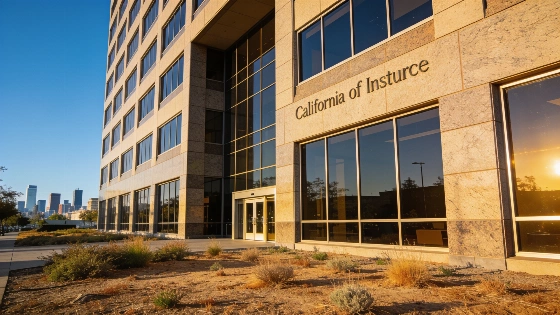
Wildfire risk and rising disaster losses have left California's insurance market unsettled, with households and businesses questioning whether coverage will remain affordable or even available. The California Department of Insurance has finished its Sustainable Insurance Roadmap, a four year project with the United Nations Environment Programme, and rolled out the California Framework for Insurable Communities. This framework follows a series of state legislative and regulatory moves going back to 2018, when Senate Bill 30 set up a working group to tackle the growing costs of wildfire, extreme heat, and flooding. The Department of Insurance reports that since 2015, wildfires have broken records in California for deaths, injuries, destroyed structures, acreage burned, evacuations, and total costs. Many homeowners and businesses have received insufficient payouts and faced underinsurance or uninsured losses (California Climate Insurance).
Insurance Commissioner Ricardo Lara introduced the new framework at COP31 in Antalya, Türkiye, on 19 November 2026. The department has worked to bring climate risk into insurance oversight and expand climate-related financial disclosures. It has also set up a Long-Term Solvency Planning Regulation. These steps are now part of the department's regular operations, marking a shift from short term projects to a more lasting regulatory stance. The department has called for expanding fire-hazard mapping statewide and developing nature-based solutions with community insurance as part of its broader climate-insurance program.
Wildfire model and ongoing challenges
The Public Wildfire Catastrophe Model is one of the most closely watched projects, but it is still in development. In November 2026, the Department of Insurance started a formal review for the Verisk Wildfire Model for the United States v4.1.1. This marked a regulatory step but has not yet produced a public model release (Verisk model procedure). The model is supposed to provide public data to guide risk reduction and development planning, but results are not yet available. Since the roadmap began in 2022, the department has tracked progress on about 40 measures, but it has not published data on how these actions have changed insurance pricing or availability.
California's exposure to climate hazards, especially wildfires, keeps insurance market stability in question. As previously reported, disaster losses have already pushed home insurance costs higher and put pressure on the market. The new framework is designed to keep communities insurable, but the real impact for residents and businesses-especially in wildfire zones-will depend on how insurers use the department's new modeling tools and regulatory steps. The Department of Insurance says 12 insurance groups, including Farmers, Mercury, Auto Club of Southern California, CSAA, USAA, Liberty Mutual, Travelers, Pacific Specialty, Privilege Underwriters Reciprocal Exchange, California Casualty, Horace Mann, and new entrants MS Transverse and Trusted Resource Underwriters Exchange of Ohio, have announced plans to stay and expand in wildfire-affected areas. The department calls its Sustainable Insurance Strategy the largest insurance reform in California in over 35 years and has raised residential and commercial coverage limits under the FAIR Plan for the first time in 25 years.
California law gives extra protections to policyholders in wildfire-affected areas. Under Senate Bill 824, insurers cannot cancel or refuse to renew residential property insurance in ZIP Codes within or next to a wildfire perimeter for one year after a state-of-emergency declaration when wildfire is the only reason for the action. This protection now covers commercial property policies as of January 1, 2026. For instance, after the Governor's emergency declarations for the Dove Fire and Mile Post 18 Fire in October and November 2026, the Department of Insurance issued bulletins blocking wildfire-based cancellations and non-renewals for one year in certain ZIP Codes. In 2025, these moratoriums protected more than 1.2 million homeowners, according to the department.
The department has also put in place the Safer from Wildfires framework, which requires insurers to give discounts to residential and commercial policyholders who take wildfire-safety steps. These discounts must be included in insurer rate filings and are also available to FAIR Plan policyholders. The department has used enforcement and settlement tools to address coverage gaps, such as requiring State Farm General to offer companion policies to some policyholders non-renewed under block actions if they buy replacement coverage through the FAIR Plan.
The department has not released outcome data on insurance availability or pricing since the roadmap was completed. Residents in high risk areas should watch for regulatory updates and the progress of the Public Wildfire Catastrophe Model, as these could affect future insurance options statewide. The Department of Insurance continues to report on insurer commitments, moratorium protections, FAIR Plan-limit increases, mitigation discounts, and model-review steps, but has not provided figures on price reductions for households or businesses. For more on the regulatory framework and ongoing developments, see the original source.