
California's approach to assigning wildfire costs to utilities faces renewed criticism after lawmakers could not agree on changes pushed by Governor Gavin Newsom. The California Public Utilities Commission (CPUC) has warned that the current system threatens both the stability of electricity service and the affordability of rates for millions of residents.
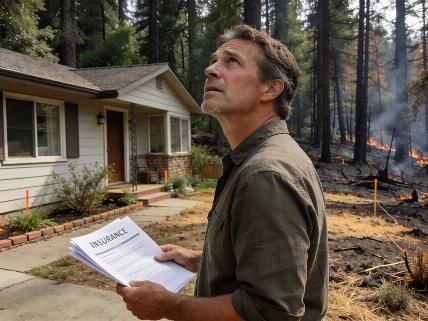
State law holds utilities responsible for all wildfire damage tied to their equipment, even if they followed approved wildfire mitigation plans. This legal standard, called inverse condemnation, means utilities may have to pay property owners for damage caused by utility infrastructure without proof of negligence. The setup exposes investor-owned utilities to massive claims when fires are linked to transmission or distribution equipment. Utilities then seek recovery through insurance, customer rates, or state-backed programs. California's Assembly Bill 1054 created the Wildfire Fund to help cover eligible claims and support utility solvency, but legal exposure remains a major risk disclosed by California utility holding companies. Sempra Corporation, in filings with the U.S. Securities and Exchange Commission, lists wildfire liability "regardless of fault," uncertainty around insurance recovery, the AB 1054 Wildfire Fund, customer rates, and the lack of legislative reform as risks that could affect its California utilities. These ongoing disclosures show that the liability structure is still unresolved and financially significant for the sector. According to Firehouse, Newsom's proposed reforms included limiting or removing subrogation, which lets insurers recover wildfire payouts from utilities. Lawmakers rejected key parts of the plan, with some groups saying it would bail out utility companies.
Financial pressure and service impacts
The CPUC's review, requested by Newsom after legislative talks broke down, found that the current system is "not sustainable and increasingly harms the state's ability to provide safe, clean, reliable, and affordable electricity service." The report noted that as wildfire risk rises, utilities face higher borrowing costs and weaker credit ratings, making it harder to invest in safety and reliability. Sempra's regulatory disclosure confirms that wildfire exposure can hit several financial channels at once: insurance recovery, the Wildfire Fund, customer-rate recovery, credit conditions, and regulatory cost disallowance. The company warns of "any inability to recover all or a substantial portion of costs from insurance, the wildfire fund established by California Assembly Bill 1054 ... rates from customers or a combination thereof." The filing also points to CPUC decisions, investigations, audits, regulations, and denials of cost recovery as possible drivers of financial performance. This matters because wildfire claims can become a balance-sheet and financing problem even after a fire ends, especially when insurance markets tighten or regulators reject recovery requests. A state fund meant to keep utilities solvent is also expected to fall short of covering future wildfire claims, leaving both customers and fire victims in a difficult financial spot.
The CPUC appears in Sempra's SEC disclosure as a regulator whose decisions can shape whether utilities recover wildfire-related costs. The filing specifically lists cost-recovery denials, disallowances, audits, investigations, ordered studies, and regulatory actions among the risks facing California utility operations. This regulatory setup creates tension among compensation for fire victims, protection of ratepayers, and utility creditworthiness. One California utility responded to the legislative deadlock by delaying spending on dozens of renewable energy projects and new customer connections, as reported by Firehouse. The company said the $2 billion deferral would help cut interest costs, but it also slows progress on clean energy and infrastructure upgrades.
Insurance market and additional reforms
California's insurance market adds more pressure to the wildfire-liability system because insurers can limit exposure through nonrenewals or cancellations after wildfire emergencies. The California Department of Insurance announced that Commissioner Ricardo Lara ordered insurers to keep residential coverage for about 50,000 policyholders in Tuolumne, Stanislaus, and Calaveras counties after Governor Newsom declared a Dove Fire emergency. The protection covers properties within the fire perimeter or nearby ZIP Codes and lasts one year from the governor's emergency declaration, even if the policyholder did not suffer a loss. The department also reported that the Business Insurance Protection Act (Senate Bill 547, Chapter 544 of the Statutes of 2025) took effect on January 1, 2026, expanding some commercial-property protections during wildfire emergencies. These steps show that wildfire policy disputes go beyond utility liability and affect the availability and continuity of property insurance. The department is finalizing new regulations to add "Safer from Wildfires" measures into insurance pricing, aiming to make a property's wildfire risk score more transparent and reward mitigation investments. More details are in the California Department of Insurance press release.
Calls for reform and competing priorities
The CPUC recommended overhauling the liability framework, strengthening support for both large and small utilities, and improving the creditworthiness of investor-owned utilities. Representatives from PG&E and Southern California Edison have pressed lawmakers to act, while consumer advocates such as Jamie Court of Consumer Watchdog argue that shareholders should pay when utility negligence causes fires. Court also criticized the CPUC's oversight of the state's three for-profit utilities.
Anthony Martinez, spokesperson for Newsom, stressed the need to protect fire victims' financial security and stabilize electricity rates. "This report continues to underscore what remains at stake," Martinez said. "The state must work to secure long-term durable solutions, stabilize electricity rates and ensure fire victims are never again turned into unsecured creditors in a bankruptcy proceeding." For more on California's changing wildfire policy landscape, see this reported earlier.