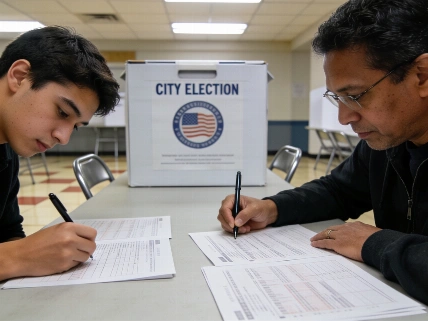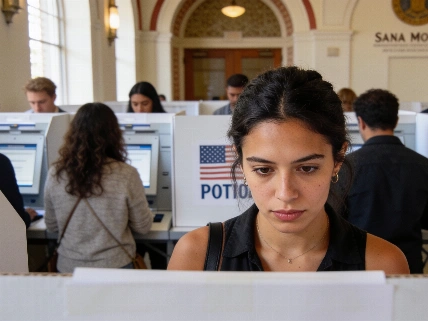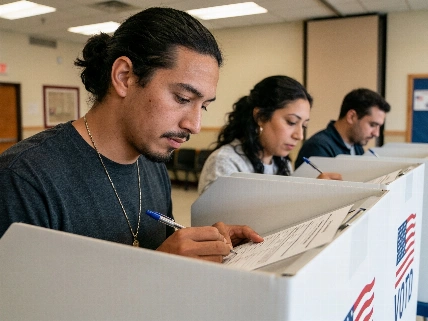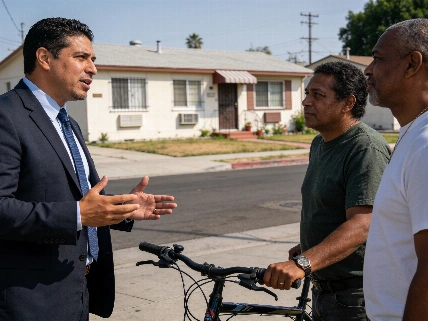
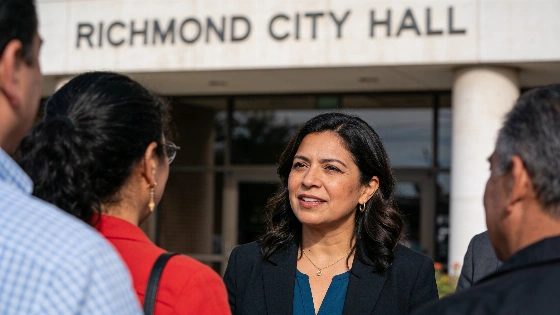
Richmond voters have selected City Council member Claudia Jiménez as their next mayor, giving her 8,643 votes and 52.22 percent of the total, based on preliminary results from NBC Bay Area and Contra Costa County election officials. Ahmad Anderson, a human resources director, finished with 7,909 votes, or 47.78 percent. The difference between the candidates was 734 votes. These numbers reflect the preliminary count as of November 4, 2026, with the county planning to certify the final results by December 3. Election officials said the initial tally included vote-by-mail and early in-person ballots. Additional updates will follow as late-arriving and provisional ballots are processed. In the first round of the mayoral election, Jiménez received 38.6 percent and Anderson 28 percent, which led to a runoff since neither candidate crossed the 50 percent mark. For more details, see the official results page.
This election drew attention across California as a test of the Richmond Progressive Alliance's influence over city policy. For two decades, the Alliance has shaped local decisions on tenant protections and housing, as well as the city's relationship with Chevron. The contest between Jiménez, backed by the Alliance, and Anderson, who ran as a moderate, brought ongoing debates within the Democratic Party about the direction of urban governance into focus. ABC7 News reported that the race was also shaped by Richmond's disputes with Chevron and the expected $550 million settlement, which became a central campaign issue.
Policy Priorities and Candidate Positions
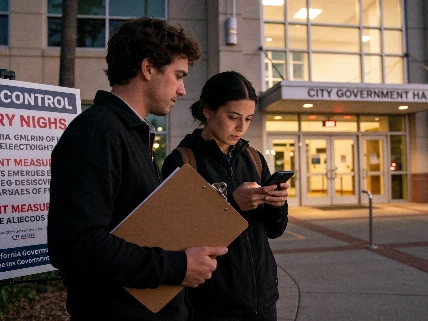
Jiménez campaigned on strict enforcement of Richmond's rent control ordinance and promised to appoint rent board members who would uphold those protections. She also pushed for repealing Costa-Hawkins to expand rent control, limiting corporate ownership in the housing market, and supporting community land trusts. Her stated goal is to protect affordable housing and prevent displacement, while creating more opportunities for residents to buy homes.
Anderson proposed strengthening renter protections and expanding access to homeownership, especially for families historically excluded from building generational wealth. He supported streamlining housing development and reducing permitting delays, as well as forming partnerships to produce housing for families and seniors. His approach aimed to make both renting and owning in Richmond more attainable for people working in the city.
Public Safety and Homelessness Approaches
On public safety, Anderson focused on police staffing and modern training, along with community policing and mental health crisis response. He said he would measure progress through response times and crime trends, as well as staffing levels and community feedback. Jiménez emphasized addressing root causes of crime and investing in prevention, supporting programs like the Office of Neighborhood Safety and the Community Crisis Response Program. She noted that police salaries and benefits have increased in recent years and credited the new police chief with filling vacancies.
Both candidates addressed homelessness as a priority. Anderson called for collaboration with county and state partners to expand shelter and supportive housing, along with mental health services. He also aimed to balance compassion with accountability for encampments affecting neighborhoods and businesses. Jiménez prioritized prevention through rent control and tenant protections, expanding shelter beds and supportive housing, and funding services through taxes on wealthy individuals and corporations. She also supported transitional housing models such as the Civic Center Motel 6 conversion.
Economic Development and Use of Chevron Settlement
Richmond's reliance on Chevron for tax revenue was a central issue. Anderson advocated for diversifying the economy by attracting clean energy and technology, as well as advanced manufacturing and maritime industries. He proposed reducing bureaucratic barriers, modernizing the port, and connecting residents to workforce training. Jiménez supported economic diversification through greater port utilization and green business attraction, with a focus on small business-led development and strategic, inclusive growth set by a progressive city council and mayor.
The city expects to receive about $550 million over ten years from a settlement with Chevron, a topic widely discussed during the campaign and reported by ABC7 News. Anderson described the funds as a long-term investment, prioritizing city services and public safety, as well as infrastructure, housing, and environmental health, while maintaining fiscal stability. Jiménez highlighted her role in improving city finances and securing the settlement. She said she would integrate community input into spending decisions, invest in city services and affordable housing, and pay down unfunded liabilities to extend the settlement's impact.
Supporters and Broader Context
Jiménez's campaign was supported by the Richmond Progressive Alliance, Democratic Socialists of America East Bay, United Teachers of Richmond, and local officials including Doria Robinson and Jackie Fielder. Anderson received backing from the California Democratic Party, Contra Costa Building & Construction Trades Council, Richmond Police Officers Association, and elected officials such as Soheila Bana and Buffy Wicks.
The outcome in Richmond follows a pattern seen in other California cities, where mayoral races have become battlegrounds for competing visions of housing and public safety, as well as economic development. For a look at how these issues have played out in Los Angeles, see this earlier breakdown.