
European Brent crude prices slid below $100 per barrel for the first time since October 7, losing nearly $9 and dropping 8.7% in a single day. Brent futures closed at $94.62 per barrel on November 4. West Texas Intermediate, the US benchmark, also fell 8.3% to end at $88.12. Both benchmarks finished at their lowest since August 31, reversing a stretch when Brent had hit a six-month high as traders braced for the conflict to escalate after the election. This was the sharpest daily drop in oil prices since April, based on market data and as reported by Reuters.
The selloff followed close attention from energy traders and analysts to whether Tuesday's US midterm elections might push President Donald Trump to pursue a resolution to the Iran war. The conflict, which began on February 28 when Trump and Israeli Prime Minister Benjamin Netanyahu launched military action, has disrupted shipping in the Strait of Hormuz and pushed up gasoline and diesel prices across the United States. Diplomatic efforts, including at least two consecutive days of talks between Iranian and Qatari officials by November 2, helped ease prices before the sharp November 4 drop. On November 2, Brent fell $3.68, or 3.2%, to $109.75 per barrel, while WTI dropped $3.43, or 3.3%, to $100.69, as reported by Reuters. The market stayed sensitive to both negotiation progress and the risk of renewed escalation, with analysts warning that tougher rhetoric after the election could send Brent toward $120.
Impact on Gasoline and Diesel Prices
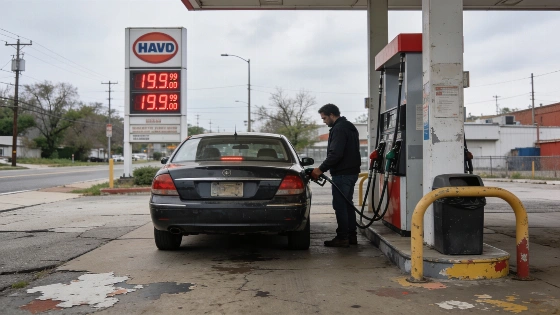
Patrick De Haan, an analyst at GasBuddy, said oil's sharp fall could bring the national average price of gasoline below $4 in the coming days. On Wednesday morning, the average stood at $4.12 per gallon, 39% higher than before the Iran war began. Diesel futures also dropped by nearly 7% to their lowest since late August, raising the chance of more relief for transportation costs and consumer prices. The U.S. Energy Information Administration's November 2026 Short-Term Energy Outlook forecast Brent's average spot price at $105 per barrel in the fourth quarter, $14 higher than the previous month's forecast, and projected 2026 gasoline at $3.91 per gallon and 2027 gasoline at $3.56, with diesel expected to average about $4.50 per gallon in 2027. The EIA assumed that convoys through the Strait of Hormuz and increased ship-to-ship transfers would support rising regional production and exports, while still treating supply restrictions as an active risk (EIA Short-Term Energy Outlook).
Tom Kloza, chief energy adviser to Gulf Oil, noted on social media that the next six weeks are typically among the most challenging periods for gasoline and diesel prices. He suggested that if neither the US nor Iran pursues "scorched earth" tactics in the Persian Gulf, prices could fall further by the second half of December.
Political and Economic Context
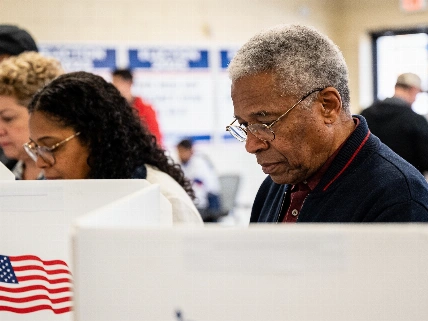
Exit polls conducted by NBC News on Tuesday found that 59% of voters were "very concerned" about the cost of gas and diesel fuel, reflecting months of consumer anxiety over inflation. Vice President JD Vance attributed the Republican Party's midterm losses to the impact of the Iran war, stating on social media, "And any honest conversation about where we go from here must start there." President Trump acknowledged the burden on American consumers, telling Fox News, "I think it's the gasoline price. People agree with what I'm doing on Iran, but they really probably weren't willing to do the short-term consequence of paying more for gasoline, and that, you know, I understand that."
Despite the recent drop, oil prices remain 60% higher than at the start of the year. On Friday, Brent crude traded as high as $118 per barrel before falling to around $94 by Wednesday. The ongoing volatility highlights how global energy markets react to geopolitical developments and domestic political pressures. According to June Goh, senior oil analyst at Sparta Commodities, markets are assessing the impact of the midterm elections on Donald Trump's next steps with the Iran war, pricing in more likelihood for the war to end. Reuters reported that the market's political interpretation was reinforced on November 3, when President Trump said the United States would end billions of dollars in annual military support to Israel, leading to a $3.45 drop in Brent to $101.32 by 1350 GMT, after trading above $107 earlier in the session, and a $2.16 drop in WTI to $94.30. The price response showed that perceived changes in U.S. policy toward Israel and Iran were being treated as direct indicators of future geopolitical risk to oil supplies (Reuters market coverage).
By November 5, oil had fallen for a fourth consecutive day as traders continued to price in a reduced probability of further escalation. Brent was down 97 cents, or 1.03%, at $93.65 per barrel, while WTI fell $1.14, or 1.29%, to $86.98 at 0211 GMT. The market remained focused on Washington's next steps rather than treating the election result as proof that hostilities had ended. The decline reflected changing expectations about risk, not a confirmed restoration of all disrupted energy flows. Diplomatic activity was centered in part on Qatar, whose officials participated in repeated discussions with Iranian representatives intended to prevent further escalation and create conditions for an end to the war. No confirmed settlement or final agreement was identified in the available reporting, and the U.S. Energy Information Administration continued to assume that Middle Eastern oil flows would remain constrained through the fourth quarter of 2026.