
Households in Del Norte, Siskiyou, Modoc, and Shasta counties face the prospect of annual electricity bills jumping by $1,440 if Pacific Power's request for a 57 percent rate increase clears the California Public Utilities Commission (CPUC). The utility, which serves about 46,000 customers in this rural stretch near the Oregon border, points to rising wildfire prevention and liability costs as the main reason for the proposed hike. According to the CPUC application record, PacifiCorp, operating as Pacific Power, filed Application 26-02-021 to recover wildfire-related costs tracked in its Wildfire Expense Memorandum Account. The application, pending before the CPUC as of November 2026, covers recovery of costs in a regulatory memorandum account rather than a standard general-rate-case request alone.
Pacific Power calculates the increase would tack on about $120 per month to the average residential bill, bringing in an extra $102.6 million in annual revenue for the company. Testimony to the CPUC from company witness Kenneth Lee Elder Jr. puts the proposed base revenue-requirement increase at $82.8 million, or 56.8 percent, and after factoring in proposed deferral amortizations, the overall net price increase would reach about $102.6 million, a 57.0 percent net jump. The rate impacts were figured using total net revenues, including power-cost revenues from PacifiCorp's ECAC and adder rate schedules, with a forecast period ending December 2027. The financial hit would land hardest in places like Del Norte County, where median incomes run about 35 percent below the California average. At a recent county hearing, many residents spoke out, with Crescent City's Florinda Salcedo telling officials, "I can't afford this - I don't know what I'm going to do."
Wildfire risk drives utility costs
The utility's request follows a string of destructive wildfires across California, many traced to power company equipment. Pacific Power's parent, PacifiCorp, agreed to pay $575 million to settle litigation over six wildfires in 2020 and 2022, including the 2022 McKinney Fire and the 2020 Slater Fire. In 2023, lightning-sparked fires in Del Norte County forced Pacific Power to run generators for weeks, revealing gaps in local backup infrastructure.
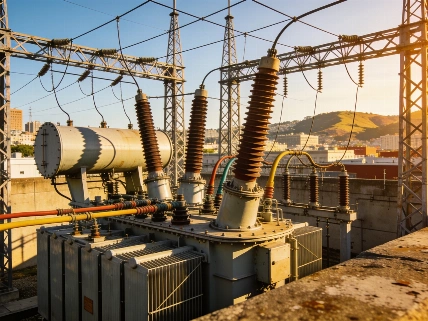
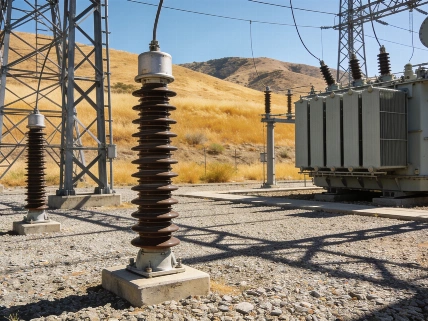
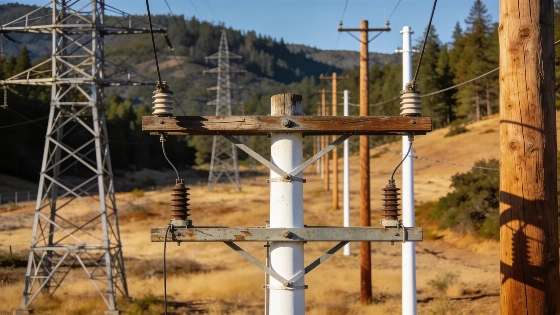
Pacific Power says about 80 percent of the new rate increase would go toward wildfire risk reduction, such as swapping out wooden poles for fiberglass or steel. The company reports investing more than $617 million in wildfire safety improvements across its California service area. Company filings with the CPUC show PacifiCorp's wildfire-mitigation cost request includes projected vegetation-management and wildfire-mitigation expenses in its California-allocated operations, with total vegetation management operations and maintenance expense expected to be about $13.4 million on a California-allocated basis for the 12 months ending December 2027. These expenses were reset from base-period levels to expected levels, reflecting forward-looking operating costs and past wildfire liabilities. Regional business manager Jill Drinkwater said, "These investments are not optional, and they are the right thing to do."
Community and political response
Local officials are organizing to push back against the proposal. Del Norte County supervisors, led by Valerie Starkey, plan to work with neighboring counties and become a formal party to the CPUC proceedings. Starkey called the rate hike a "huge surprise and a huge blow," noting that even a partial reduction would still leave residents with much higher bills. State Sen. Mike McGuire labeled the request "reckless" and urged regulators to examine Pacific Power's safety record closely.
Compared to Pacific Gas and Electric Co.'s 2024 increase of $37 per month for average customers, Pacific Power's proposal stands out as one of the largest in recent memory. The company argues its California operations face higher wildfire risk and serve fewer customers per square mile than in Oregon, where a much smaller 0.3 percent rate increase is being sought. Over the past several years, Oregon customers have seen cumulative increases just under 40 percent.
Financial pressures and regulatory context
California utilities can be held financially responsible for wildfire damages even without a finding of negligence, a policy that has led to credit rating downgrades for Pacific Power, Southern California Edison, and PG&E. Lower credit ratings drive up borrowing costs, which can push customer bills even higher. A state-commissioned report found that each percentage point increase in borrowing costs adds about $5 per month to customer bills. Governor Gavin Newsom's efforts to limit utility liability for wildfire costs failed in the most recent legislative session, leaving the issue unresolved.
Pacific Power's last rate hike in California, approved two years ago, raised bills by 19 percent, or about $27 per month. Many customers thought that increase would be the last major jump for a while. The current proposal, filed less than two months before 2027, has reignited debate over the sustainability of relying on investor-owned utilities in rural California. For more on how utilities have warned rural residents about power disruptions, see this reported earlier.
The CPUC is expected to review Pacific Power's request over the coming year, with a final decision likely in August. If approved, the increase would not take effect immediately in January. According to the CPUC testimony record, the requested revenue requirement is tied to future operating and mitigation costs as well as account recoveries, with the proceeding identified as a California general-rate-case with a forecast period ending in December 2027. Local governments and residents are preparing to present evidence and arguments to try to reduce the financial impact on their communities.
Alongside the company-specific rate case, California's statewide Wildfire Fund non-bypassable charge is a separate regulatory mechanism. The CPUC adopted a 2027 charge of $0.00545 per kilowatt-hour to collect $860 million during 2027, with a projected $42.4 million over-collection through 2026 producing a total 2027 annual revenue requirement of $902.4 million. This charge applies to eligible customers of the large electrical corporations covered by the CPUC's framework and is scheduled to apply from January 1 through December 31, 2027.
PacifiCorp has also filed a separate application with the CPUC, seeking to establish a successor Wildfire Liabilities and Legal Expenses Sub-Account within its existing Wildfire Expense Memorandum Account to cover fires occurring after June 30, 2026. This regulatory-account mechanism would preserve the company's ability to seek recovery of qualifying wildfire liabilities and legal expenses through a later regulatory process.
According to a CPUC filing, PacifiCorp explained that it faces substantial additional expenses in the form of settlements related to recent wildfires in its service area, as well as the need to make significant investments in its transmission and distribution infrastructure to continue to operate the system safely and reliably.
For more details on the regulatory filings and testimony, see the San Francisco Chronicle's coverage and the official CPUC records.