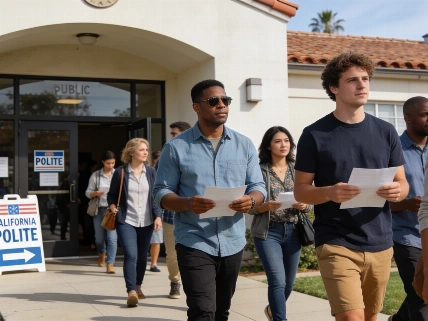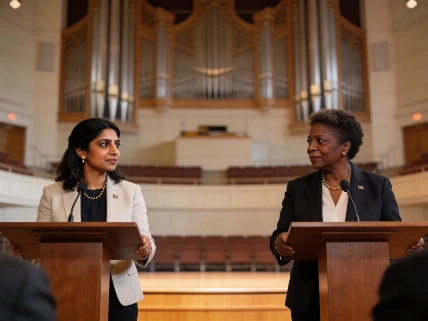

San Francisco's congressional seat, held for decades by Nancy Pelosi, now sits at the center of a heated race between State Sen. Scott Wiener and Supervisor Connie Chan. Both Democrats bring progressive records, but their policy differences and political alliances have intensified the fight to succeed Pelosi, who steps down after nearly forty years in Congress and was the first woman to serve as Speaker of the House. The 2026 race stands out as the first truly competitive succession contest for California's 11th Congressional District since 1987, when Pelosi began representing San Francisco. The district covers most of the city's neighborhoods, making the contest unusually focused geographically. ABC7 News noted that voters are preparing to choose someone other than Pelosi for the first time in a generation.
Wiener and Chan emerged from a crowded June 2026 primary with 12 candidates. Wiener led with 95,816 votes, or 40.7%, while Chan took 69,899 votes, or 29.7%. The top-two primary system advanced both Democrats to the general election runoff, setting up a contest that tests whether Pelosi's endorsement of Chan can counter Wiener's larger primary showing and longer statewide legislative experience. With so many candidates in the primary, the runoff outcome hinges on how supporters of the ten eliminated contenders realign and whether turnout shifts in November. A USC Democracy and Fair Elections Lab poll released October 22 found Wiener viewed favorably by about 47% of respondents and Chan by 41%, with 9% undecided and 3% not planning to vote in the House race. This points to a tighter contest than the primary margin, but does not represent a certified result.
The 11th Congressional District includes most of San Francisco's neighborhoods. Wiener, a longtime state legislator with nearly a decade in the California Senate and broad name recognition, and Chan, a city supervisor with Pelosi's endorsement, have each built support among prominent Democratic figures and organizations. Chan's endorsements include Pelosi, U.S. Sen. Adam Schiff, Rep. Ro Khanna, and former U.S. Sen. Barbara Boxer. Wiener is backed by the California Democratic Party, state Attorney General Rob Bonta, Rep. Sam Liccardo, and former Rep. Katie Porter. The campaign has become a test of competing Democratic alliances in the city, with Chan's coalition stressing continuity with Pelosi's network and Wiener's supporters pointing to his independent statewide policy work. As the San Francisco Chronicle reported, the race will decide not only who represents San Francisco in Congress but also what kind of Democrat voters want to follow Pelosi.
Policy Divides on Housing and Technology
Housing affordability sits at the center of the campaign. Wiener has pushed for faster construction and fewer regulatory hurdles, while Chan focuses on publicly subsidized housing, rental assistance, and stronger tenant protections. Both back expanded renter protections and Medicare for All, but their strategies for achieving these goals differ. These divides mirror the broader debate among San Francisco Democrats over the best approach to housing and social safety net issues.
San Francisco's role in the artificial intelligence sector has put technology regulation in the spotlight. Chan supports a nationwide pause on new data centers until protections for electricity customers, grid reliability, and the environment are in place. Wiener rejects a blanket pause, warning it could send development overseas and threaten local jobs. He instead calls for enforceable AI safety rules, transparency, and resource protections.
Taxation, Ballot Measures, and Foreign Policy Stances
Both candidates support higher taxes on great wealth, but they split on San Francisco's Proposition D, a June ballot measure that would have raised business taxes based on executive compensation ratios. Chan backed the measure to fund public services, while Wiener argued it could hurt economic recovery. Voters rejected Proposition D, with 52.8% voting against and 47.1% in favor.
The candidates have also addressed U.S. policy toward Israel and Gaza. Both have called Israel's actions in Gaza genocide and criticized the destruction of Palestinian communities. Chan has urged blocking all U.S. weapons transfers to Israel. Wiener opposes U.S. funding for Israel's military and sales of offensive weapons, but supports Israel's access to defensive systems at its own expense. Wiener's use of the term "genocide" after initially declining to do so drew criticism from some Jewish and pro-Israel groups.
Organizational Support and Political Alliances
Wiener's endorsements include the United Food and Commercial Workers International Union, Equality California, Alice B. Toklas LGBTQ Democratic Club, and San Francisco YIMBY. Chan is supported by the California Federation of Labor Unions, SEIU California, the California Teachers Association, and the Harvey Milk LGBTQ Democratic Club. These alliances highlight broader divides in San Francisco's political scene as voters prepare to pick Pelosi's successor.
By early November 2026, several polls showed Wiener ahead by about six points, but the race stayed close, with Chan's campaign stressing the need for high turnout to close the gap. Mission Local reported that Chan's supporters were focusing on boosting participation rather than just persuading undecided voters. The final result depends on turnout, late-deciding voters, and how support from the ten eliminated primary candidates shifts. Until official canvass results are released, no candidate can be declared the winner. The contest stands as San Francisco's first competitive congressional race in about 40 years, and the outcome will decide the city's first new representative since Pelosi began her tenure. For more on the race and its implications, see ABC7 News coverage and Mission Local reporting.
For additional background and previous coverage, see CBS News Bay Area.