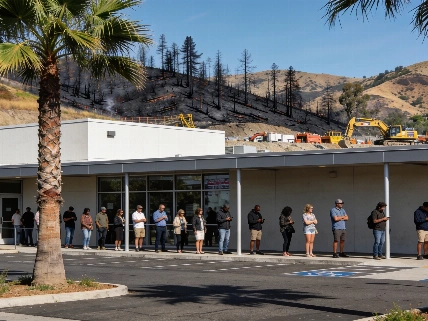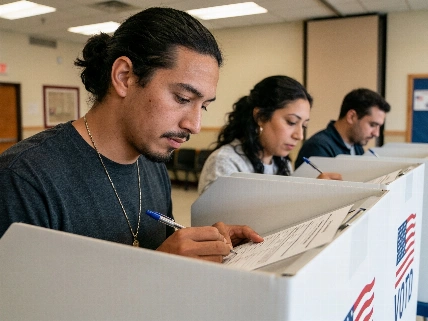

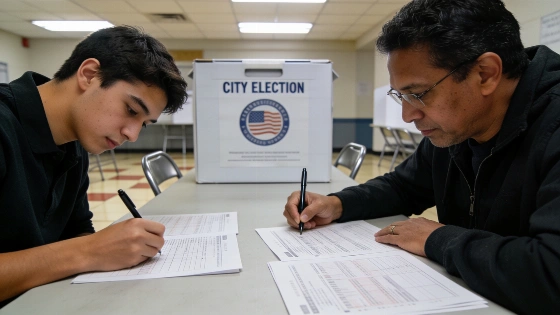
Voters in Berkeley faced a packed ballot this election cycle, with early numbers pointing to clear backing for major infrastructure spending and new rules for tenant protections. The city's plan to fund a municipal public bank through a special parcel tax, though, struggled to gain enough support as initial results rolled in. As of November 2026, neither the city nor Alameda County Registrar of Voters has released official returns or certified outcomes for Measures U, V, X, or the public-bank parcel-tax proposal. No post-election implementation timeline has been set by city officials. The only official city update during this period was a police notice unrelated to the election (City of Berkeley).
Measure U would let the city issue $300 million in bonds for public infrastructure and property purchases, and early returns showed 69.38% support. This measure needs a two-thirds majority to pass. The city's Vision 2050 report flagged the need to upgrade aging water, sewer, street, and park systems, stating that current infrastructure falls short of present and future needs. An impartial city analysis said Measure U's funds could go toward emergency response facilities and accessibility upgrades, as well as seismic and climate resilience and city property modernization. Over the 40-year bond period, taxpayers would pay an average of $22.14 per $100,000 of assessed property value each year, generating about $15.2 million annually for city projects.
Sales Tax and Budget Pressures
Measure V, a half-cent sales tax proposal, drew 51.9% support in the first count. If it passes by simple majority, Berkeley's total sales tax rate would rise to 10.75%, matching the highest in Alameda County. The city council put Measure V on the ballot as a general tax, so revenue could be used for any city purpose. Officials have cited a $30-million structural budget deficit, mainly from salaries and pensions. Without new revenue, city leaders have warned of possible cuts, including closing Fire Station 4 in the Berkeley Hills, layoffs in public safety, and reductions to city programs. The Alameda County Registrar of Voters has not released an official statement of vote, ballot text, or impartial analysis for Measure V (Alameda County Registrar of Voters).
Changes to Rent Ordinance
Measure X, which would revise Berkeley's Rent Stabilization and Eviction for Just Cause Ordinance, saw 66.52% support in early results. The measure would cap rent hikes at 10% per year, lower the threshold for tenants to form a union from 10 to five units, and require landlords to show good cause before ending a tenancy. Nonprofit groups that own, lease, or control subsidized rentals could see fees reduced or waived under the new rules. County officials have not independently confirmed whether Measure X met all statutory requirements.
Public Bank Funding in Doubt
Measure Z, which would create a special parcel tax to fund a city-backed public bank, received 60.33% support in early returns. The measure would set a tax of $0.06 per square foot on residential improvements and $0.09 per square foot on non-residential improvements, with an estimated $9.2 million raised in the first year and more than $58 million over six years. These funds would serve as capital for a municipal bank, pending state approval, with the aim of supporting affordable housing and green energy, as well as climate-resilient infrastructure and small business programs. If approved, the tax would start January 1, 2027. The election's governing resolution numbers, tax-rate ordinances, bond counsel, and effective dates for these measures have not appeared in official election materials.
For more on the preliminary results and background on these measures, see Mercury News coverage.