Brazil's annual inflation rate reached 4.63% in October, according to the country's statistics agency IBGE. This figure moved above the central bank's target range, even as price increases lost momentum compared to the previous month. IBGE tracks several inflation indicators, including the IPCA consumer-price index and the IPP producer-price index. The agency noted that industrial prices, measured by the IPP, rose 1.54% in September 2026. These changes reflect shifts in producer prices, which do not directly translate to consumer costs.
Consumer prices increased 0.14% in October, slowing sharply from September's 0.82% jump. The latest monthly figure landed below economists' forecasts, which had pointed to a 0.25% rise. Despite this slowdown, the annual inflation rate edged up from 4.58% in September and stayed above the central bank's 3% target, which allows a margin of 1.5 percentage points on either side. IBGE's official release schedule set the publication of IPCA, INPC, and SINAPI data for October on November 12, 2026.
Food costs drive inflation while other sectors ease
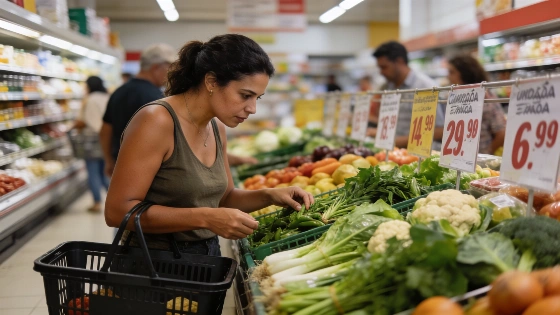
IBGE reported that food and beverage prices rose 1.04% in October, putting the most upward pressure on the index. Meanwhile, transport costs dropped by 0.59% and housing expenses fell by 0.51%, which helped offset some of the overall increase. The difference between producer and consumer price indices matters, since producer-price shifts can show input costs and industrial pricing without directly setting the consumer basket's monthly or 12-month change.
The central bank reacted to ongoing inflation by pausing its monetary easing cycle last week, keeping the benchmark Selic interest rate at 13.75%. Policymakers pointed to a worsening inflation outlook as the reason for holding rates high. William Jackson, chief emerging markets economist at Capital Economics, said a return to monetary easing would likely depend on inflation moving lower, possibly from March, and on fiscal reforms that could reduce risk premiums.
Currency and policy context
President Luiz Inacio Lula da Silva's recent reelection has contributed to a weaker Brazilian real and higher long-term interest rates, according to the report. These shifts have also pushed inflation forecasts up. The situation in Brazil reflects broader inflation pressures seen in other countries, as reported earlier about U.S. consumer prices.
Reuters provided the underlying data and reporting for these developments. Additional background on Brazil's inflation indicators and release schedules is available from the IBGE's official news agency.