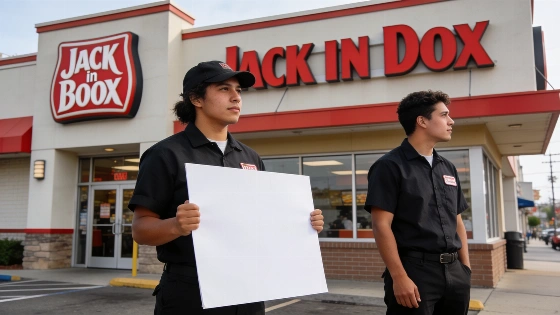
Jack in the Box workers on Park Street in Alameda left their posts, claiming bounced paychecks, late wages, and employer retaliation. Legal Aid at Work said on October 23, 2026, that these pay problems sparked a planned strike and protest, and reported that similar complaints surfaced at other restaurants run by the same franchisee. The group tied the dispute to California’s fast-food labor rules, pointing out that Governor Gavin Newsom signed AB 1228 in 2023, which set up a statewide Fast Food Council to create standards for wages and workplace conditions. Legal Aid at Work said that as of October 2026, the council had no chair and hadn’t met since 2025, leaving a gap in oversight for fast-food labor. Their statement outlined the workers’ claims but did not confirm any court finding of wage theft or employer fault. Staff attorney Samuel Aber said clients had to borrow for groceries and lean on family, adding that missing paychecks puts these workers in a tough spot. More information is available from Legal Aid at Work.
California’s minimum wage for covered fast-food workers is now twenty dollars per hour, set by AB 1228 and enforced through a sectoral system separate from the general statewide minimum. In Oakland, organizers have put forward the Oakland Living Wage for All Act of 2026, which would gradually raise the city’s minimum wage to thirty dollars an hour for city council review. Oakland’s current minimum wage is seventeen dollars and thirty-four cents per hour, while San Jose pays eighteen dollars and forty-five cents and San Francisco pays nineteen dollars and sixty-one cents. Each city adjusts its minimum wage every year for inflation.
City council to decide on wage increase measure
Oakland’s Rules and Legislation Committee voted to send the minimum wage proposal to the full city council. Alameda County elections officials confirmed the petition had enough valid signatures, so the initiative qualified for council action. The council can adopt the measure as written, send it to voters at the November 7, 2028, general municipal election, or ask for an economic impact study under California Elections Code Section 9212 before making a final call. If a study is requested, it must be delivered within 30 days, and then the council must either pass the measure or put it on the ballot. The initiative’s certification and related legislative files were set for full-council review as non-consent items, but certification alone does not raise wages. Under the plan, large employers would pay thirty dollars an hour by 2030, medium-sized employers by 2035, and small employers by 2037. The timeline for these increases depends on what the council decides and whether the measure goes to voters. Details on the council’s options and the legislative process are reported by the San Francisco Inquirer.
Tonisha Scott, an organizer with One Fair Wage, said the campaign’s goal is that “one job should be enough.” The Black Organizing Project, which helped gather signatures, described the effort as a way to help longtime residents stay in Oakland. Keala Uchoa, communications manager for the group, said, “We’re fighting, not just for ourselves, but our family members, our neighbors, our comrades to be able to live and stay in Oakland.”
Denis Sosinskiy, a postdoctoral scholar at UC Berkeley, said research on minimum wage hikes usually finds moderate effects on consumer prices, though businesses with many low-wage workers may need to adjust. No minimum wage increase was approved at the committee meeting; the proposal now waits for city council action. The measure’s top wage of thirty dollars per hour would not take effect until July 1, 2037, with larger employers required to reach that level before medium-sized and small employers, following the phased schedule described by the San Francisco Inquirer. The council’s decision will set whether the measure is enacted directly, sent to an election, or reviewed through a short statutory impact study first.