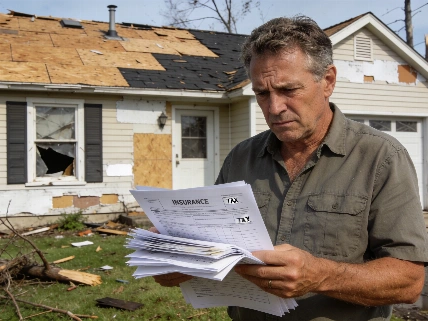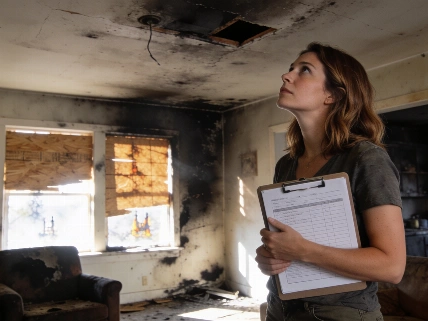
Retirees who own their homes outright along Florida’s Gulf Coast now face sharply higher costs to remain in place. In the Sarasota-Bradenton area, annual expenses for a retired couple can approach $78,000, based on estimates that include insurance, healthcare, property taxes, and daily living needs. These numbers come from Insurify and 24/7 Wall St., but they are not official statistics or benchmarks for the region, as no independently verified government data was found for these specific figures.
Homeowners insurance has become a major recurring cost. Insurify reports the average annual premium for a Florida policy covering $300,000 in dwelling value is $6,060. This does not cover flood insurance, which can tack on another $1,500 each year. Some reports mention insurance rate reductions in certain Florida counties and note Citizens Property Insurance Corporation’s average 8.7% rate cut, but no official regulatory order or filing confirming these changes was found. Premiums still take up a large share of the retirement budget, and rate changes differ by county, policy form, and renewal status.
How property and healthcare costs shape retirement budgets
Property taxes for a homesteaded home in Sarasota-Bradenton are estimated at $4,500 per year. Healthcare costs also weigh heavily: Medicare Part B premiums for two people total about $4,870 annually, and additional Medigap, Part D, dental, and out-of-pocket expenses are estimated at $9,000. Combined, insurance and healthcare reach nearly $13,870 each year. These figures are based on estimates from 24/7 Wall St. and do not represent official county or federal data releases.
Other key expenses include $12,000 for food and dining, $5,500 for utilities, $8,500 for transportation and vehicle replacement, $7,000 for home maintenance and roof reserves, and $15,000 for travel, gifts, personal expenses, and emergencies. Federal income tax on retirement withdrawals is estimated at $4,000. These calculations assume the couple bought their home before the pandemic-driven jump in property values and do not have mortgage payments.
Migration trends and the impact of rising insurance premiums
Despite repeated forecasts that higher hurricane-related insurance costs would push retirees out of Florida, migration data from the Internal Revenue Service has been cited showing the state gained 111,742 residents and $20.65 billion in adjusted gross income in the latest reporting period. However, the IRS data referenced consists of technical download and FOIA directory pages, and does not provide published migration tables or retiree-specific inflow statistics. These figures reflect broader population and income shifts rather than retirees alone, and should not be taken as official confirmation of migration trends tied to insurance costs. For more on IRS data releases, visit the IRS Statistics of Income migration data page.
For those weighing retirement on Florida’s Gulf Coast, the lack of a state personal income tax and the possibility of capped property taxes offer some relief. Still, insurance premiums and healthcare costs continue to shape the financial outlook for retirees, with a mortgage-free couple in Sarasota-Bradenton still needing close to $78,000 a year to maintain their standard of living, according to estimates from Insurify and 24/7 Wall St. For more background on Florida insurance market trends, see reporting by Bloomberg and the Florida Office of Insurance Regulation.
For further details, see the original coverage at Beinsure.